Îles Lavezzi — offshore shoal
Mérouville
The dive that made this archipelago's reputation, and the fish that still hold it.
- Depth
- 17–36 m depending on itinerary
- Certification
- Advanced
- Experience
- Intermediate
- Current
- Condition-dependent
- Dive Style
- Pinnacle / Shoal · Granite Reef
How we rate
Our ratings compare the twenty-eight dives in this Explorer with one another; they are not universal scores. They show where each site stands within the DCC selection for photography, scenery and marine life, and five represents the strongest expression of that quality.
The Dive
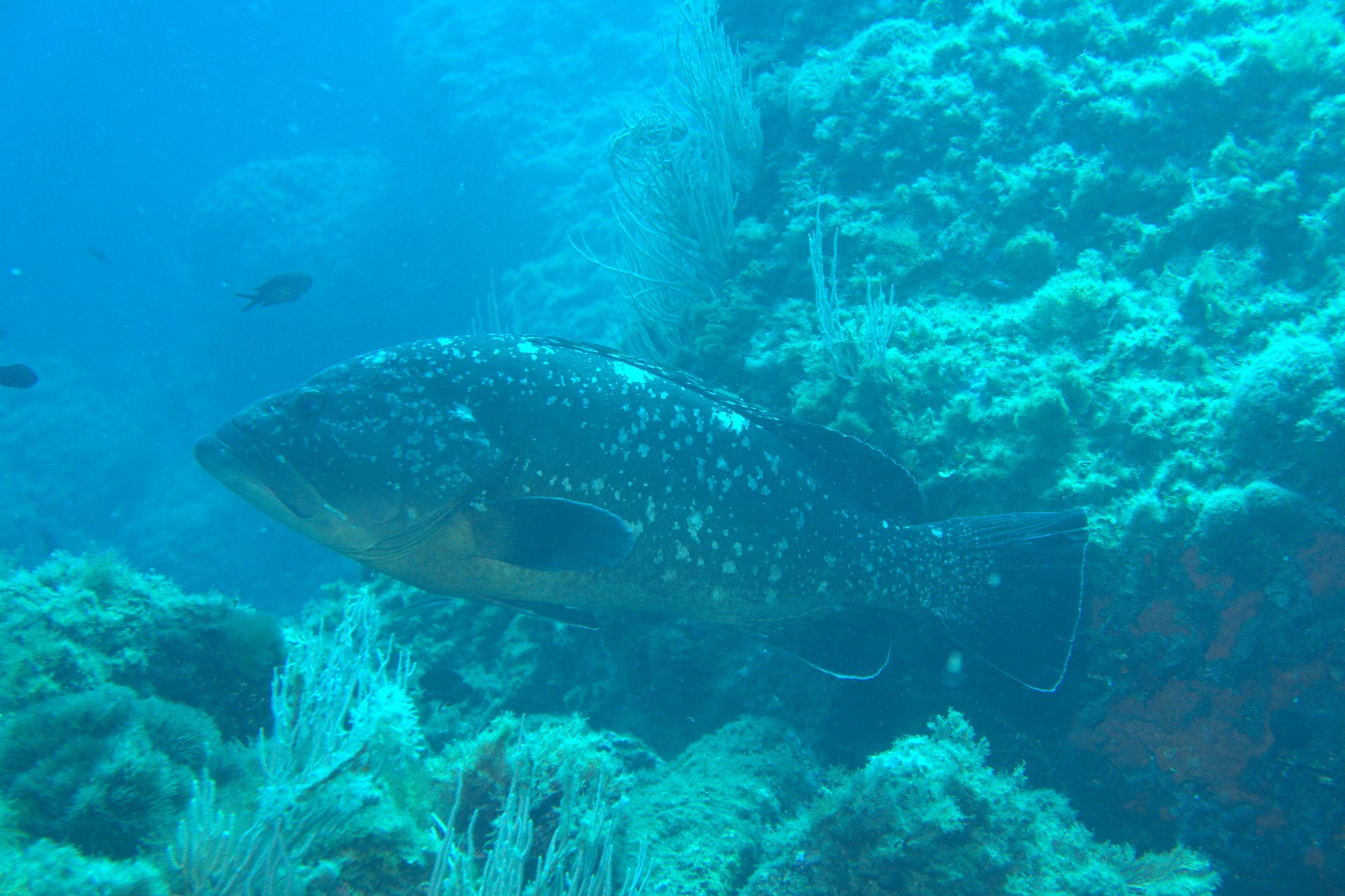
Mérouville is a granite shoal standing alone on a sand floor in open water between Cavallo and Lavezzu, and it is the most recognised dive in southern Corsica. Its French nickname — the grouper town — is a trade name rather than an official one, but nobody who has dived it argues with the description.
What makes it exceptional is not simply that dusky groupers live here. Dusky groupers live on plenty of Mediterranean reefs. What is unusual is their size, their number in one place, and above all their indifference to divers. Corsica has protected the species since 1980, the oldest grouper moratorium in France, renewed in December 2023 for a further ten years, and the Lavezzi sector sits inside a national nature reserve on top of that. Fishing-effort analysis carried out for the international marine park recorded a substantial rise in grouper abundance in the reserve across the 1990s and 2000s, with the Lavezzi sector showing the strongest increase of any measured.
The result is a reef where large, slow, territorial fish have simply stopped treating a diver as a threat. It is a demonstration of what protection does, and it happens to be photogenic.
Also known as Sec de Pelu · Sec du Pellu (FR) · Città delle Cernie · Secca delle Cernie (IT) · "the City of Groupers"
The Experience
You drop onto rounded granite domes split by deep fissures, rising from sand into mid-water. The groupers usually find you before you find them: they emerge from beneath the blocks and hold position, turning slowly to keep you in view rather than retreating. Several are heavy, thick-shouldered animals.
Away from them the shoal has its own structure — overhangs, sand channels between the domes, and deeper flanks where red gorgonian fans begin. Dentex patrol the edge of visibility, arriving fast and leaving faster. The dive is usually run as a circuit of the main rocks with a shallower finish on the upper shoal, where the light comes back and a safety stop is comfortable.
Underwater Landscape
An isolated granite shoal: massive rounded domes and boulder groups, fractured by vertical fissures, rising from a surrounding sand floor at around 30 m to a summit in the upper teens. Sand channels separate the main outcrops; the deeper, north-facing flanks fall into shade.
Why It’s Special
- 01
A documented, long-protected resident population of dusky grouper, at close quarters and unbothered
- 02
An isolated shoal in open water: the fish are concentrated by geography, not by feeding
- 03
Red gorgonian growth on the deeper, shaded flanks
- 04
The clearest single illustration in this region of what four decades of protection produces
- 05
The reference dive of the Réserve Naturelle des Bouches de Bonifacio
Marine Life
Dusky grouper (Epinephelus marginatus) is the resident species and the reason the site exists in the diving imagination. Also regularly present: brown meagre, common dentex, several seabream species, moray, and clouds of damselfish over the rock. Amberjack and, less often, other large pelagics pass through in the warmer months. Barracuda schools are reported here.
Flora & Benthic Life
Red gorgonian (Paramuricea clavata) on the shaded deeper flanks, where current exposure favours it. Encrusting sponges, bryozoans and yellow cluster anemones on the shadowed faces; Posidonia meadow on the sand approaches.
Best Conditions
Exposed on all sides, so the shoal is dived when the sea allows rather than on a schedule. Current runs here and can be significant; because circulation in the Strait is wind-driven, it turns with the dominant weather. Good horizontal visibility transforms the site, since much of its effect depends on seeing the whole structure at once.
Photography
Wide angle, unambiguously. The defining frame here is a large grouper in the foreground with a diver and granite behind it, and the site gives you unhurried opportunities to build it. Shoot slightly up from below the fish. A second subject worth the dive on its own is the gorgonian growth on the deeper flanks, which needs light brought with you.
DCC Tip
Slow down before you think you need to. Divers arrive at Mérouville with a mental image and start hunting for it, which is exactly the behaviour that keeps groupers at ten metres' distance. Settle on the sand beside a block, stop finning, and let the fish decide the range. They almost always close it.
Safety & Conservation
An offshore shoal with no shelter and real current potential: the dive is planned around the conditions of the day and may be replaced at short notice. Depth and profile are set by the guide according to certification and recent experience. No feeding, no touching and no pursuit of groupers — this population's behaviour is the product of protection and can be degraded by pressure. Inside the Réserve Naturelle des Bouches de Bonifacio; access is subject to current protected-area regulations and daily operational conditions.
Dive these too
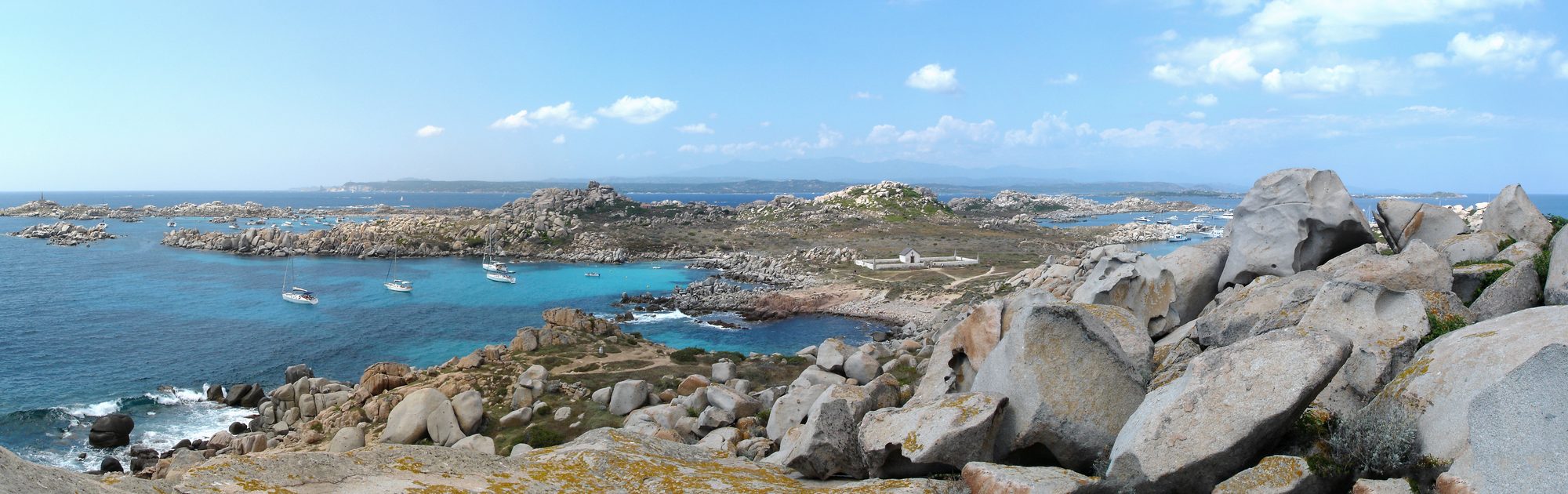
Lavezzi & the Strait of Bonifacio
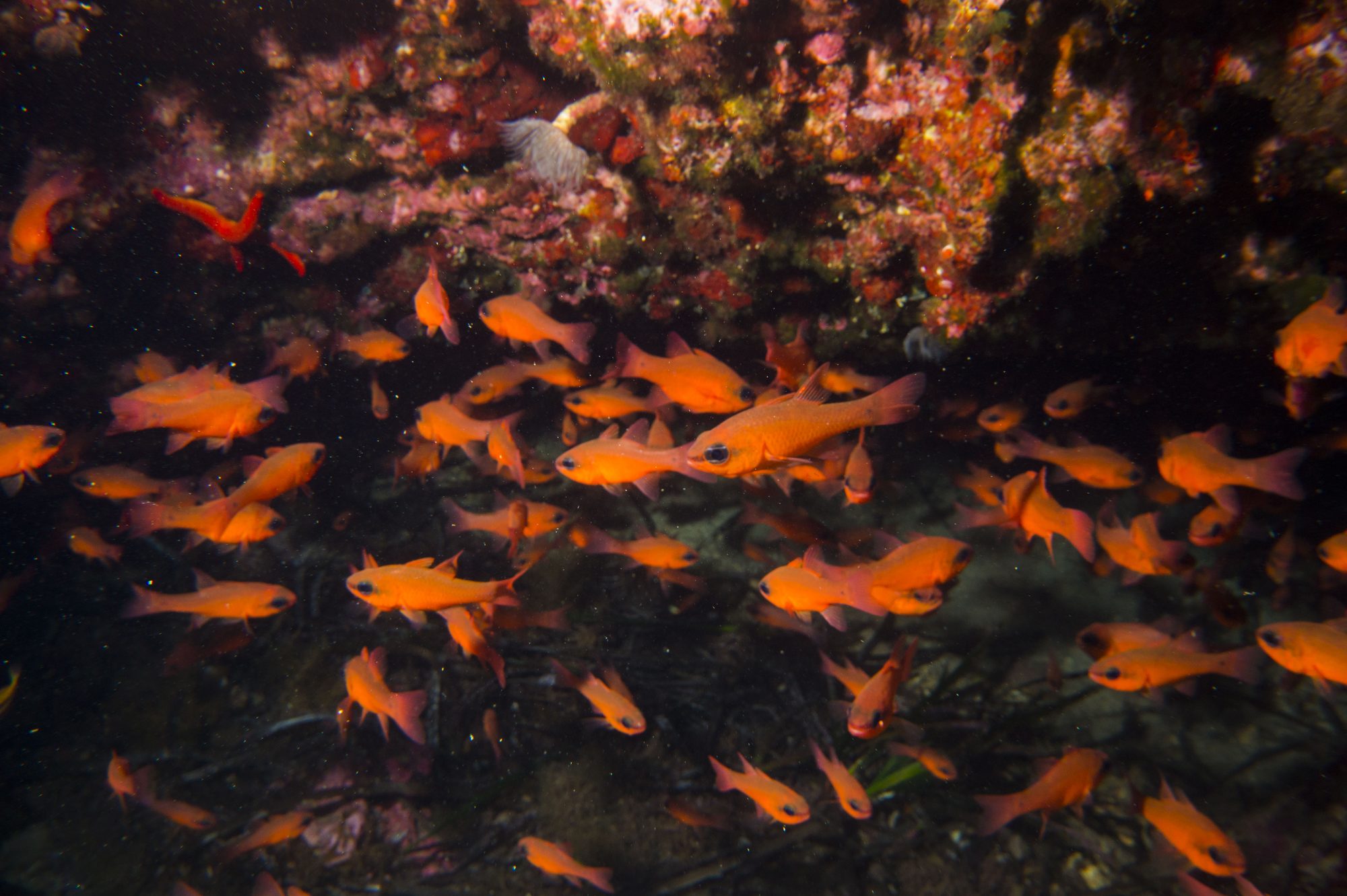
Les Cloches
Granite terraces and cavities that sound with the swell.
Lavezzi & the Strait of Bonifacio
Tête d'Homme
A granite massif thirty metres high, with a face in profile.
Lavezzi & the Strait of Bonifacio
Beccu — Le Chameau
A shallow labyrinth of arches, tunnels and faults in granite.