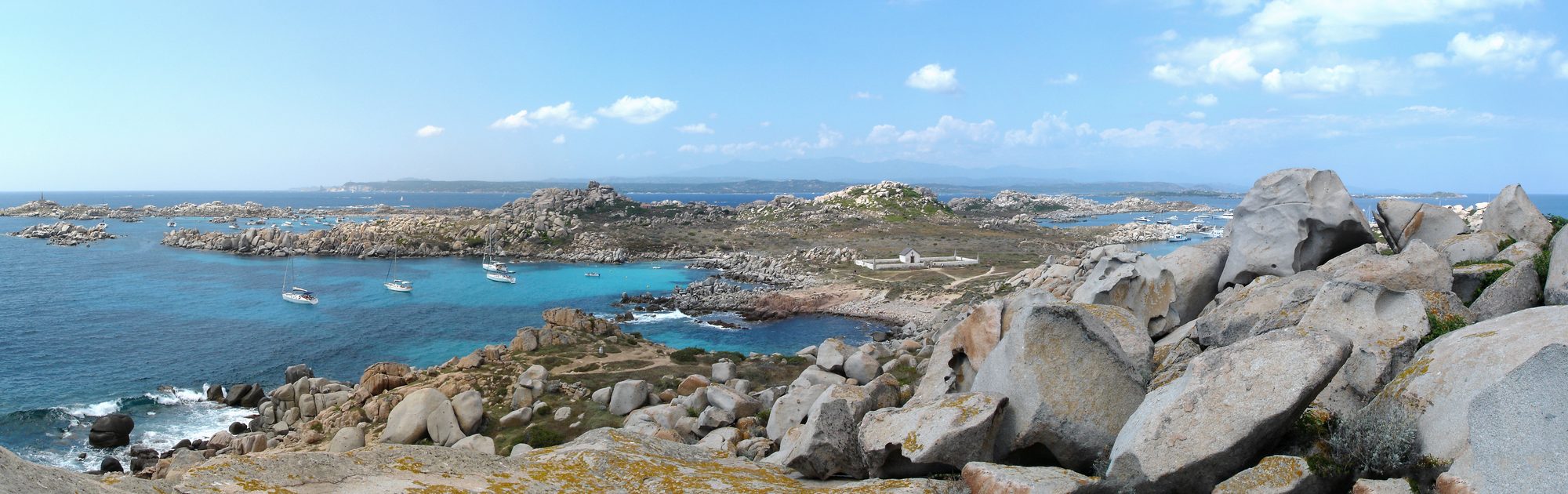
Western Lavezzi
Tête d'Homme
A granite massif that resolves, from one angle only, into a human profile.
- Depth
- 15–40 m depending on itinerary
- Certification
- Advanced
- Experience
- Intermediate
- Current
- Moderate
- Dive Style
- Pinnacle / Shoal · Granite Reef · Wall
How we rate
Our ratings compare the twenty-eight dives in this Explorer with one another; they are not universal scores. They show where each site stands within the DCC selection for photography, scenery and marine life, and five represents the strongest expression of that quality.
The Dive
Some site names are wishful. This one is not: from a particular approach and a particular depth, the seaward face of the rock reads unmistakably as a face in profile, and having seen it once you cannot unsee it for the rest of the dive.
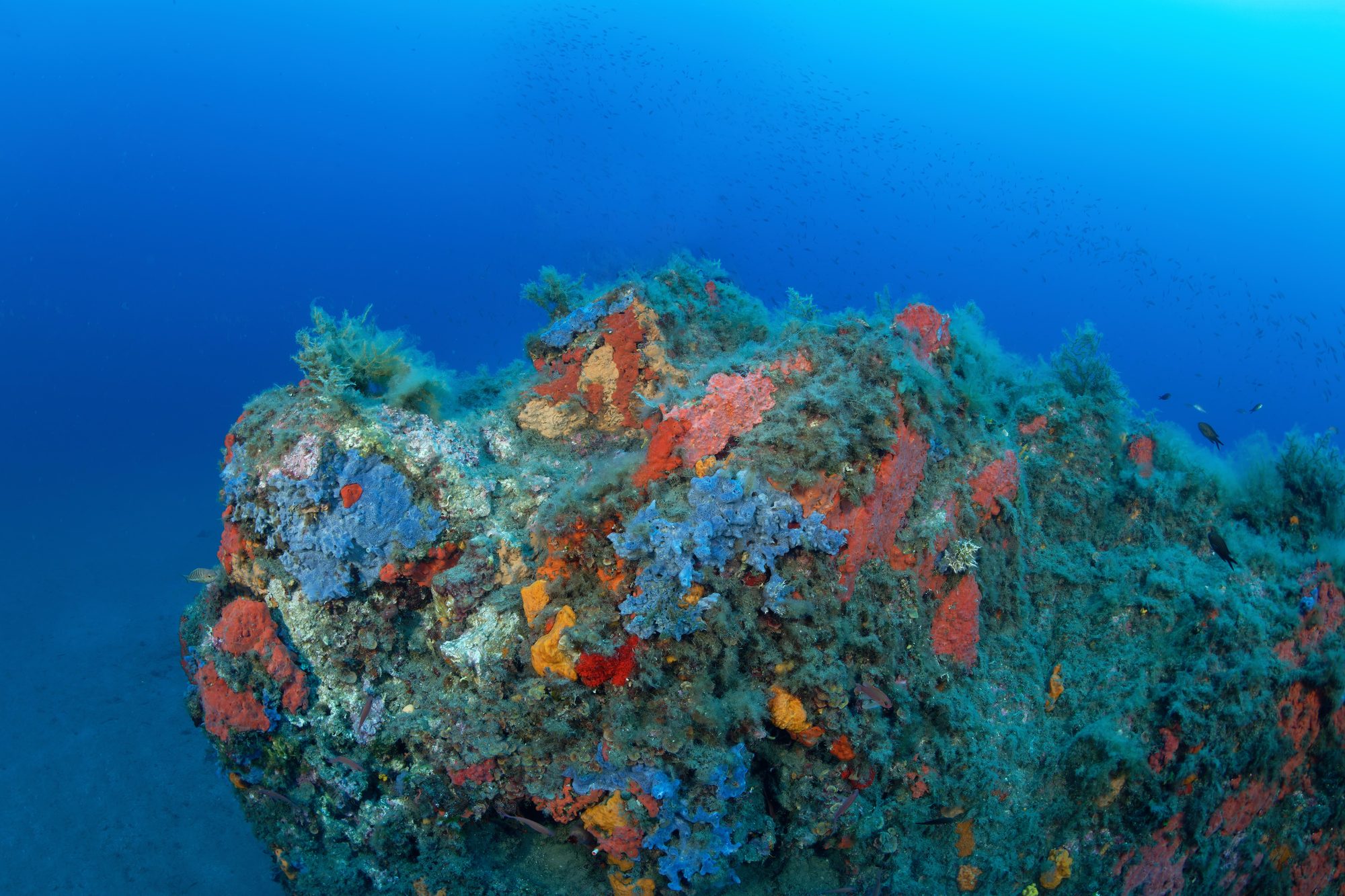
The formation is a single enormous mass of granite rising some thirty metres off the bottom, with passages running beneath and between the outlying blocks. It is the most architectural of the western Lavezzi sites — less a reef than one very large object that you swim around, exploring its walls and terraces in turn. The exposure is greater than at the sheltered inner sites, and the marine life reflects that: this is a place where large fish use the structure, holding station against the current on the upcurrent faces and disappearing round the corner when you follow.
It lies in the sector associated with the loss of the Sémillante, and that history belongs to the area rather than to this dive.
Also known as La Tête d'Homme (FR)
The Experience
The route circumnavigates the massif, dropping first along the deeper flank where the drop-offs carry gorgonian growth, then working up and around through the passages under rock. Depth is managed by how far down the wall you elect to go rather than by the terrain forcing it.
Groupers here behave differently from Mérouville: larger individuals tend to hold in the shadow at the base of the walls, watching rather than approaching. Barracuda and brown meagre are reported around the structure, and dentex work the exposed corners.
The passages under the outlying blocks come late in the circuit and change the pace. They are short, open at both ends, and they put you close enough to the rock to see the encrusting life on it — which, after twenty minutes of looking at a wall from ten metres away, is a useful correction of scale.
Underwater Landscape
One massive granite formation rising roughly thirty metres from the seabed, with vertical and overhanging faces, terraces, and passages running beneath outlying blocks. Sand and coarse sediment at the base.
Why It’s Special
- 01
A single monumental granite form rather than a reef — the scale is legible in a way it rarely is underwater
- 02
The profile itself, which is genuinely and unexpectedly recognisable
- 03
Gorgonian growth on the deeper drop-offs
- 04
Passages under rock that add relief without introducing overhead
Marine Life
Dusky grouper, often large and holding in shadow at the wall base. Barracuda, brown meagre, dentex and moray are all reported at the site. Damselfish over the upper terraces.
Flora & Benthic Life
Red gorgonian on the deeper drop-offs and shaded faces. Encrusting sponges, bryozoans and yellow cluster anemones on the walls; algal turf on the sunlit upper surfaces.
Best Conditions
More exposed than the inner Lavezzi sites; moderate current is normal and increases with the wind. Clear water matters here because the site's argument is its scale.
Photography
The best site in the western Lavezzi for diver-in-landscape work: the structure gives you scale, which is the hardest thing to convey in Mediterranean wide angle. Place the diver small and high against the massif rather than close to the lens. The gorgonian faces need artificial light.
DCC Tip
Ask your guide to show you the profile before you start the circuit rather than after. Once you have the viewpoint fixed, the rest of the dive makes spatial sense — divers who see it at the end often realise they have been navigating the same rock blind for forty minutes.
Safety & Conservation
Depth accumulates easily on a wall with no natural stopping point; the profile is planned in advance and monitored. Passages are swim-throughs with light at both ends, not penetration. Gorgonians are slow-growing and break on contact — keep fins clear of the wall and do not use the fans as handholds. Inside the Réserve Naturelle des Bouches de Bonifacio; access is subject to current protected-area regulations and daily operational conditions.
Collections
Dive these too
Lavezzi & the Strait of Bonifacio
Tête de Cheval
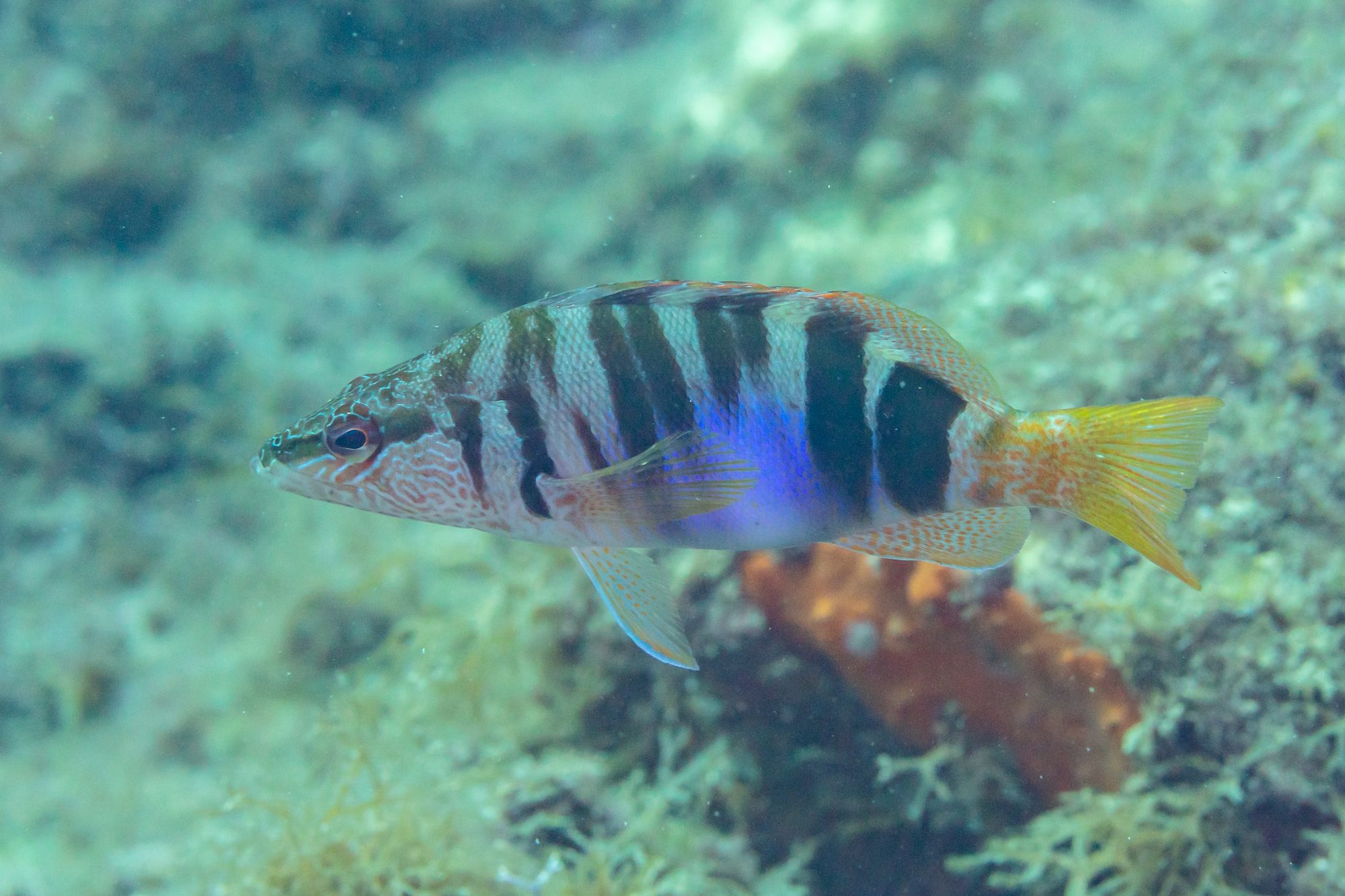
Isolated rocks in open water, with dentex crossing the gaps.
Lavezzi & the Strait of Bonifacio
Mérouville
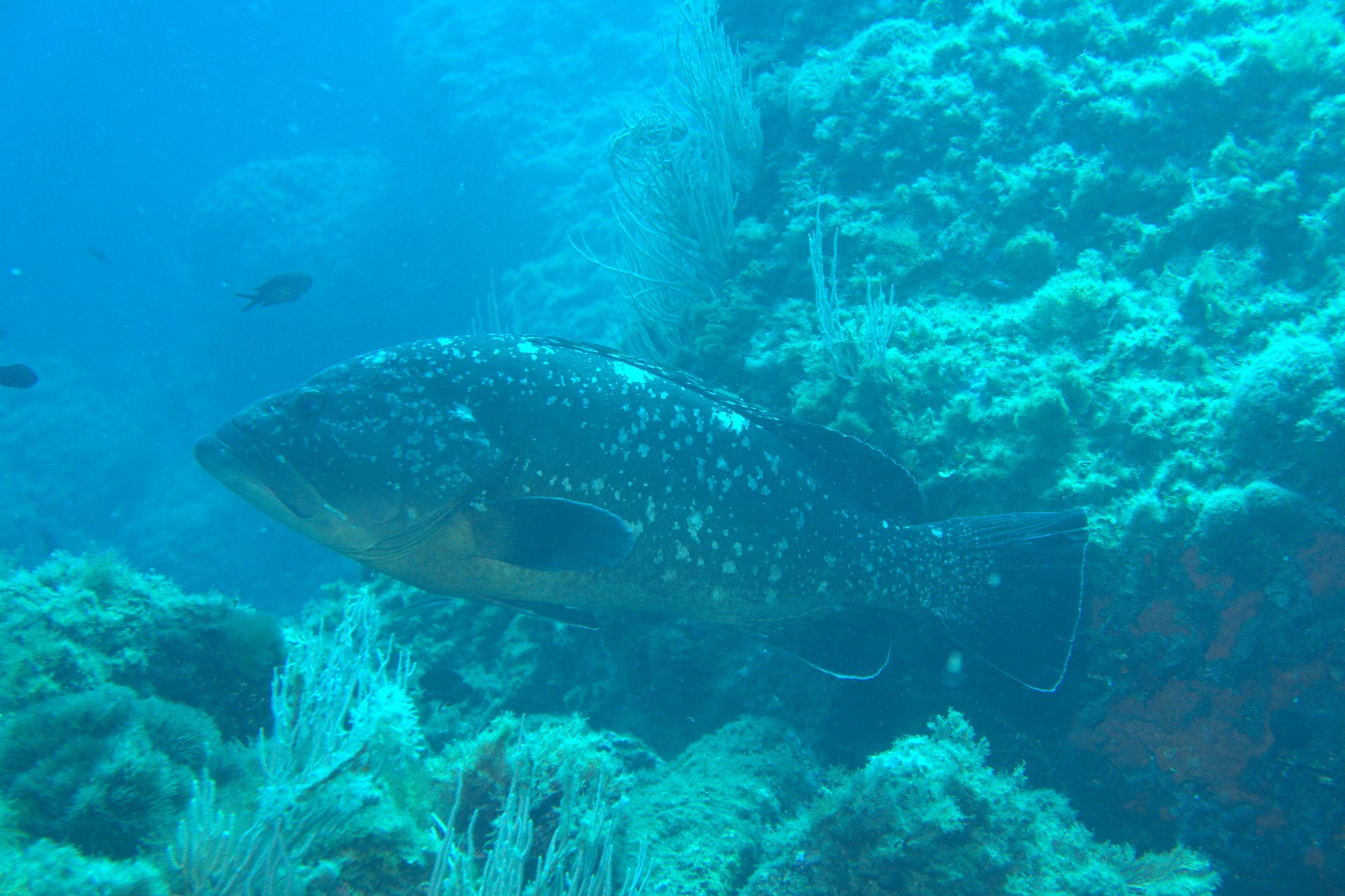
Large resident groupers on an isolated granite shoal in open water.
Lavezzi & the Strait of Bonifacio
La Piramide
A granite pinnacle wrapped in damselfish, from 30 m to 8 m.