Western Lavezzi
Les Cloches
A reef that rings with the swell.
- Depth
- Shallow to approximately 35 m depending on itinerary
- Certification
- Open Water — Advanced recommended
- Experience
- Beginner
- Current
- Low
- Dive Style
- Granite Reef · Cavern Formations
How we rate
Our ratings compare the twenty-eight dives in this Explorer with one another; they are not universal scores. They show where each site stands within the DCC selection for photography, scenery and marine life, and five represents the strongest expression of that quality.
The Dive
Les Cloches takes its name from something you hear before you understand it. Cavities in the granite hold pockets of trapped air, and as the swell works through the rock those pockets compress and release with the rhythm of the sea. The effect is a low, irregular knocking that carries through the water — bells, in the local reading.
Beyond the acoustics, this is one of the most adaptable dives in the archipelago. The reef begins among partly emergent blocks in very shallow water and steps down through boulder terraces and seagrass to considerably deeper ground, which means the same site can serve a diver on their fourth dive and one on their four-hundredth without either feeling short-changed. The shallow sector is bright and busy; the deeper sector is quieter, darker and more structural.
It also carries fragments of amphorae at shallow depth — small, unremarkable-looking pieces of fired clay that are the residue of two thousand years of shipping passing through this gap. They are archaeological material and they stay where they are.
The Experience
The first part of the dive is spent among block fields close to the surface, with damselfish massing overhead and seabream working the gaps. The rock here is pale and heavily grazed, and the light is direct enough that a torch is pointless.
Deeper, the terrain organises itself: larger blocks, cleaner faces, deeper gaps between them. This is where the cavities are, and where the sound is loudest. A dentex may follow the group for part of the route. The dive usually finishes back in the shallow sector, which is a pleasant place to spend the last ten minutes rather than an obligation.
Underwater Landscape
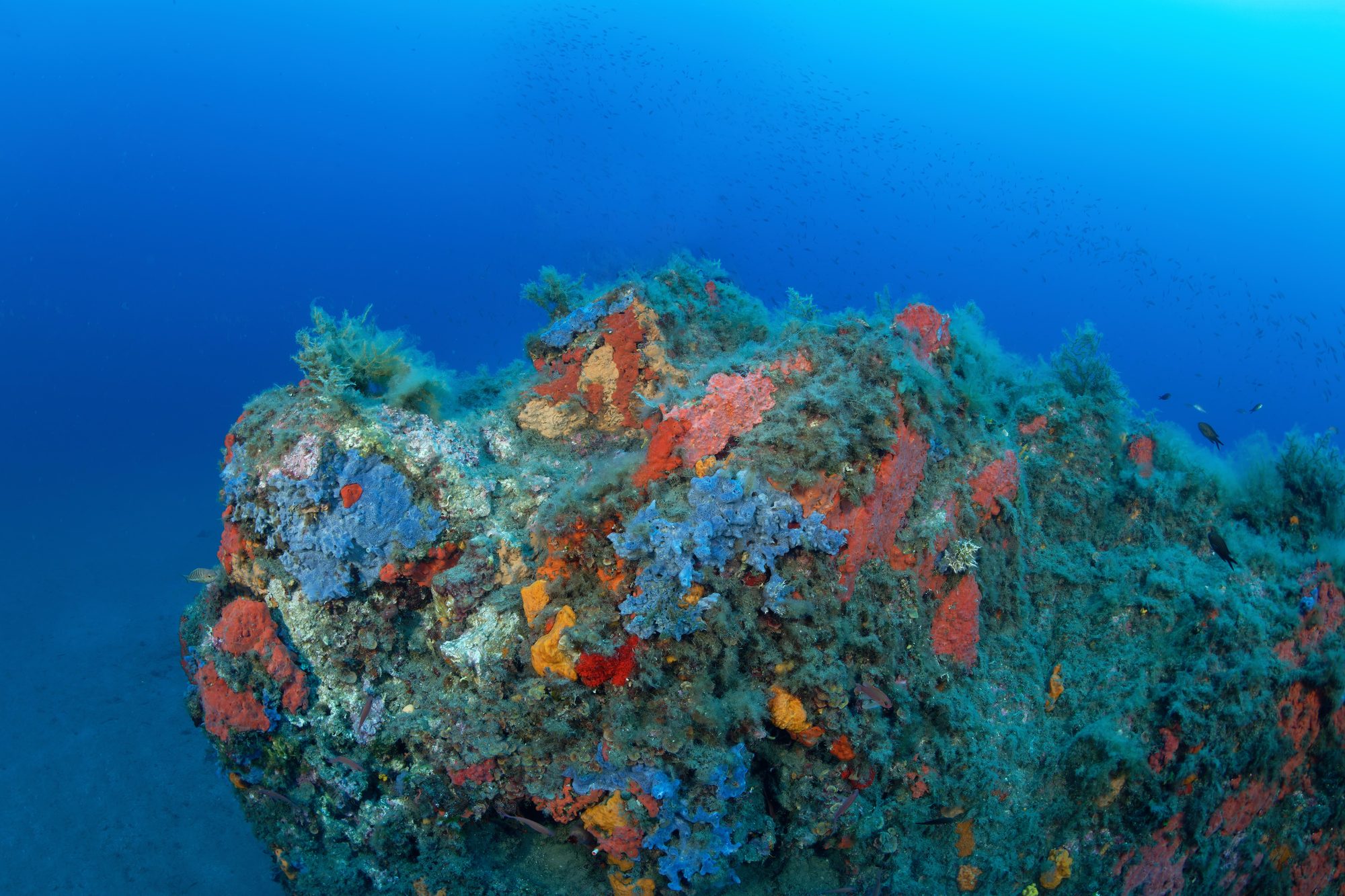
Granite reef in three registers: an emergent and near-surface block field, a middle zone of boulder terraces and seagrass, and deeper structured rock with cavities and fissures. The bells are hollows in the rock that retain air rather than true caverns.
Why It’s Special
- 01
The air-bell acoustics, which have no equivalent at any other site in this catalogue
- 02
A genuinely wide usable depth range, so a mixed group can dive it together
- 03
Shallow amphora fragments — evidence of the Strait as an ancient shipping corridor
- 04
One of the few Lavezzi sites where the shallow finish is the best part of the dive
Marine Life
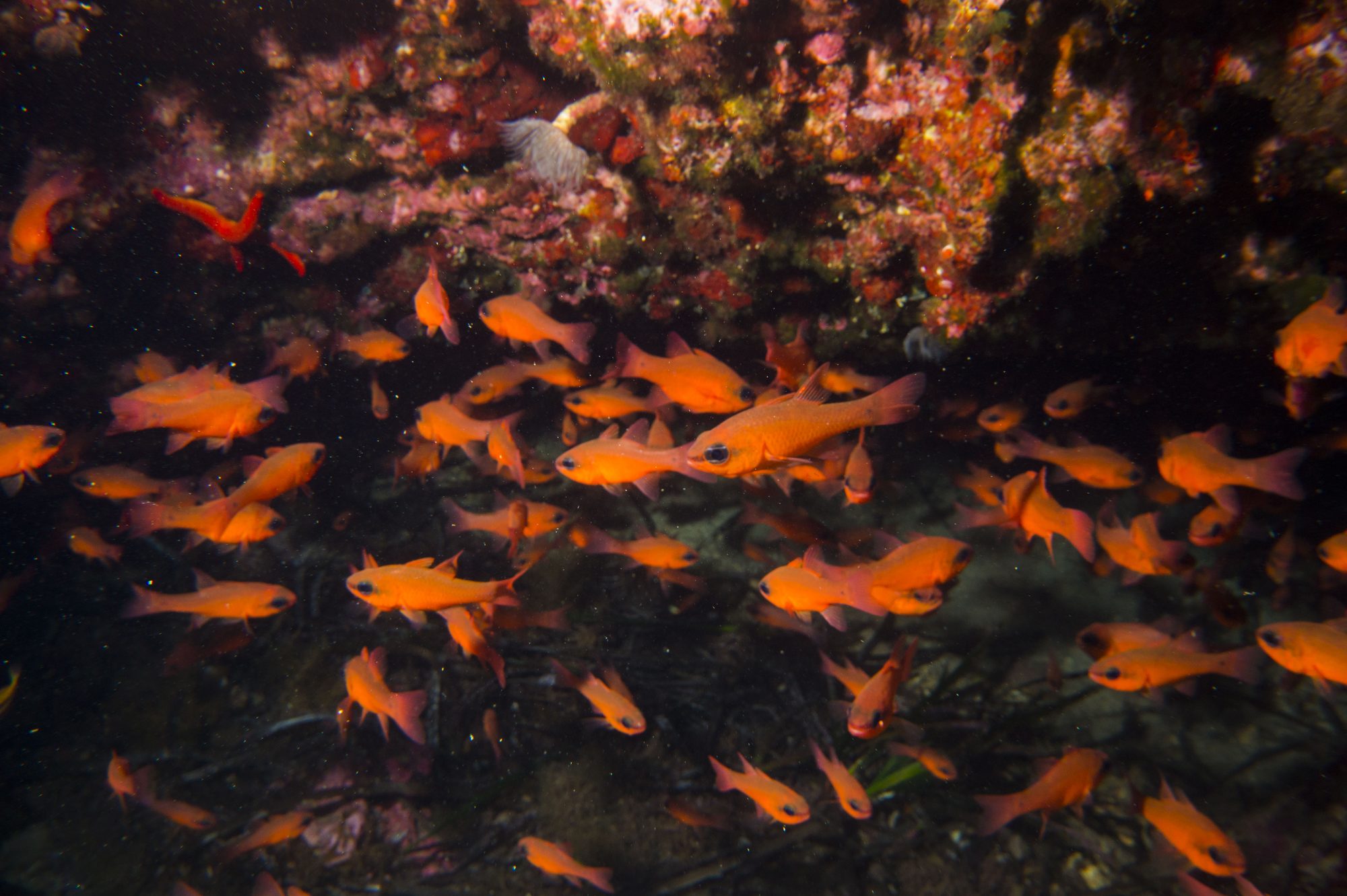
Damselfish in quantity over the shallows, white and two-banded seabream, salema, wrasse. Dusky grouper is present. Dentex hunt across the site. Moray in the fissures; forkbeard in the shaded recesses.
Flora & Benthic Life
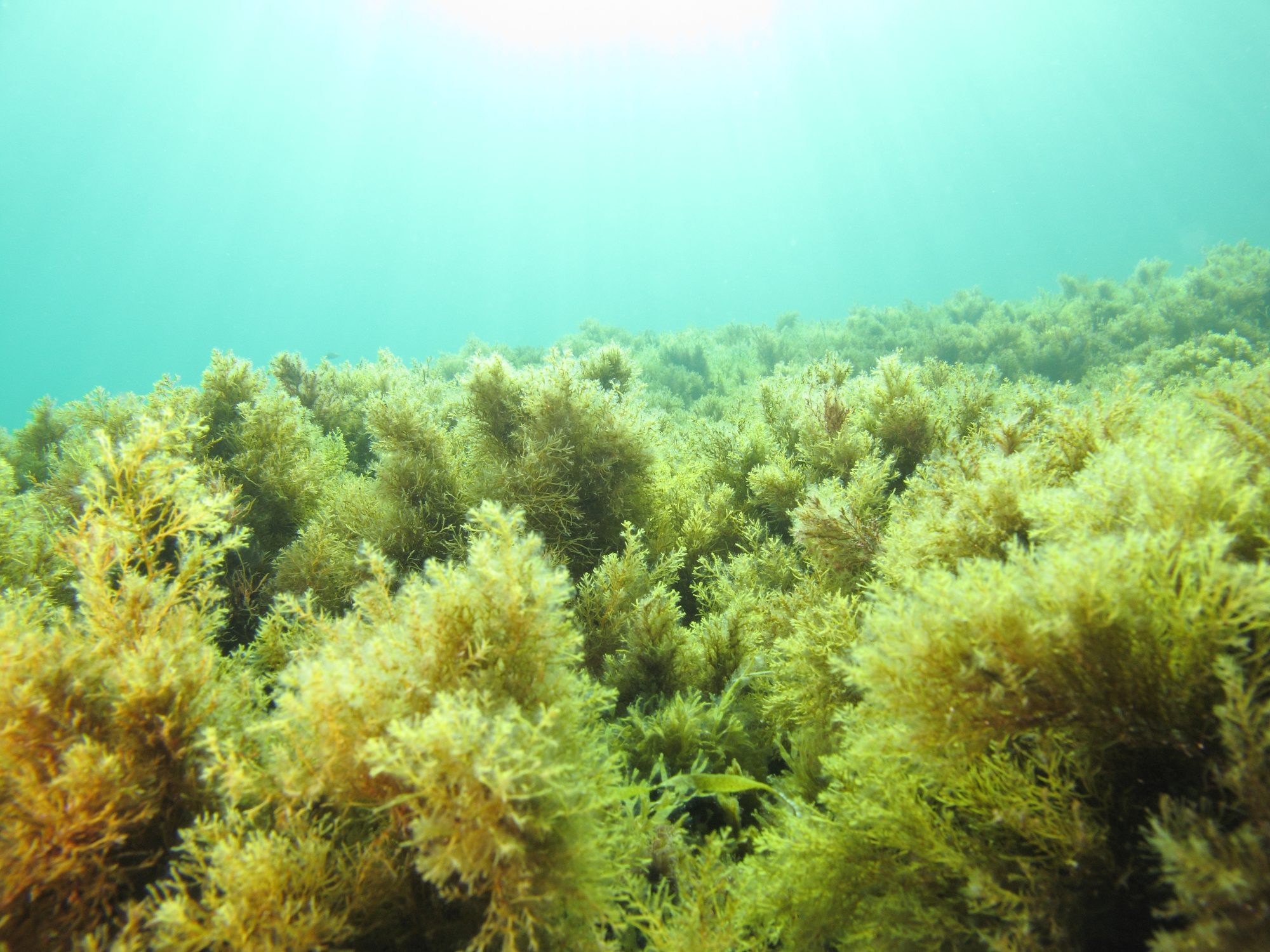
Photophilic algal turf across the illuminated shallows, Posidonia on the sand between outcrops, and encrusting sponges and bryozoans on the shaded deeper faces.
Best Conditions
Best with west in the wind, when the western Lavezzi are in the lee. The bells themselves need swell to sound, so a completely flat day is quieter. Current is generally undemanding.
Photography
Natural-light wide angle in the shallow sector, where the granite is bright and the water column is short — this is one of the few sites here where you can leave the strobes off and get a better picture for it. Deeper, the cavity mouths make strong frames for a diver silhouette.
DCC Tip
Stop finning and stop breathing out for a moment near the cavities. The sound is easy to miss when you are generating your own noise, and most divers surface without having heard the thing the site is named after.
Safety & Conservation
Cavities and openings here are shallow recesses, not penetrable overhead: no route in this dive takes you beyond the light, and none will be offered. Buoyancy discipline matters in the shallow sector, where swell moves you around and the reef is within fin range. Amphora fragments and any other archaeological material are protected — look, don't touch. Nothing is to be moved or removed. Inside the Réserve Naturelle des Bouches de Bonifacio; access is subject to current protected-area regulations and daily operational conditions.
Dive these too
Lavezzi & the Strait of Bonifacio
Beccu — Le Chameau
A shallow labyrinth of arches, tunnels and faults in granite.
Lavezzi & the Strait of Bonifacio
Mérouville
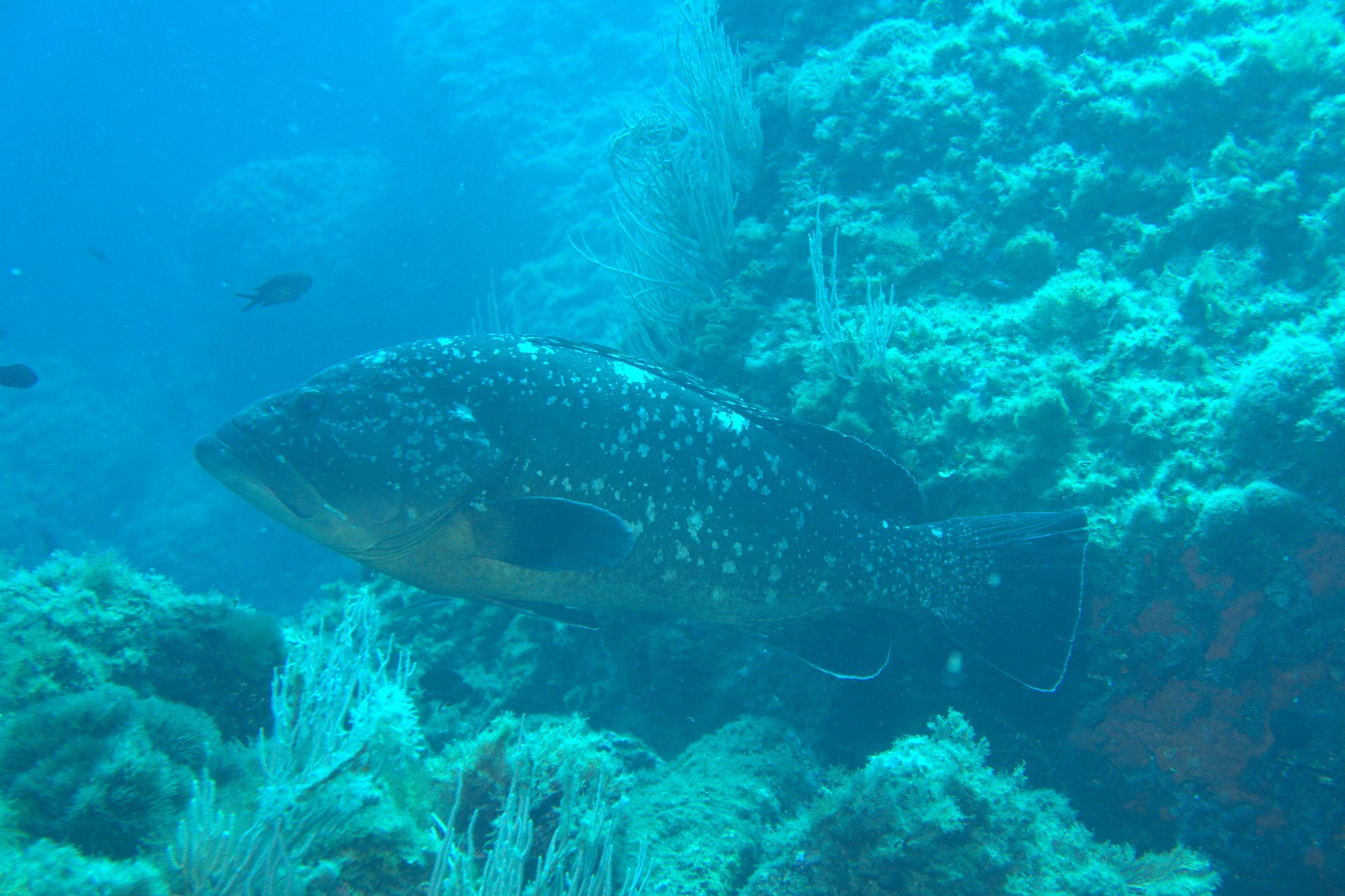
Large resident groupers on an isolated granite shoal in open water.
Lavezzi & the Strait of Bonifacio
La Piramide
A granite pinnacle wrapped in damselfish, from 30 m to 8 m.