Spargi — Spargiotto
Spargiottello
Easy terrain, difficult water, and a wall of two gorgonians.
- Depth
- 3–30 m depending on itinerary
- Certification
- Open Water — Advanced recommended
- Experience
- Intermediate
- Current
- Condition-dependent
- Dive Style
- Offshore Reef · Wall
How we rate
Our ratings compare the twenty-eight dives in this Explorer with one another; they are not universal scores. They show where each site stands within the DCC selection for photography, scenery and marine life, and five represents the strongest expression of that quality.
The Dive
Spargiottello is a broad granite reef south-west of Spargiotto island, with a flat cap in very shallow water and a steep wall dropping off one side. It is one of the few sites in this catalogue where a source calls the diving "simple" and another calls the current "quite strong", and both are right: the terrain is easy and the water is not.
Its distinguishing feature is botanical, in a manner of speaking. The reef carries two gorgonian species in clearly separated zones — white gorgonian spread across the north-eastern descent where light still reaches, and red gorgonian covering the shaded western walls almost completely. Seeing the two occupy different faces of the same rock, according to light and flow, is the most legible demonstration of how these communities are organised that the region offers.
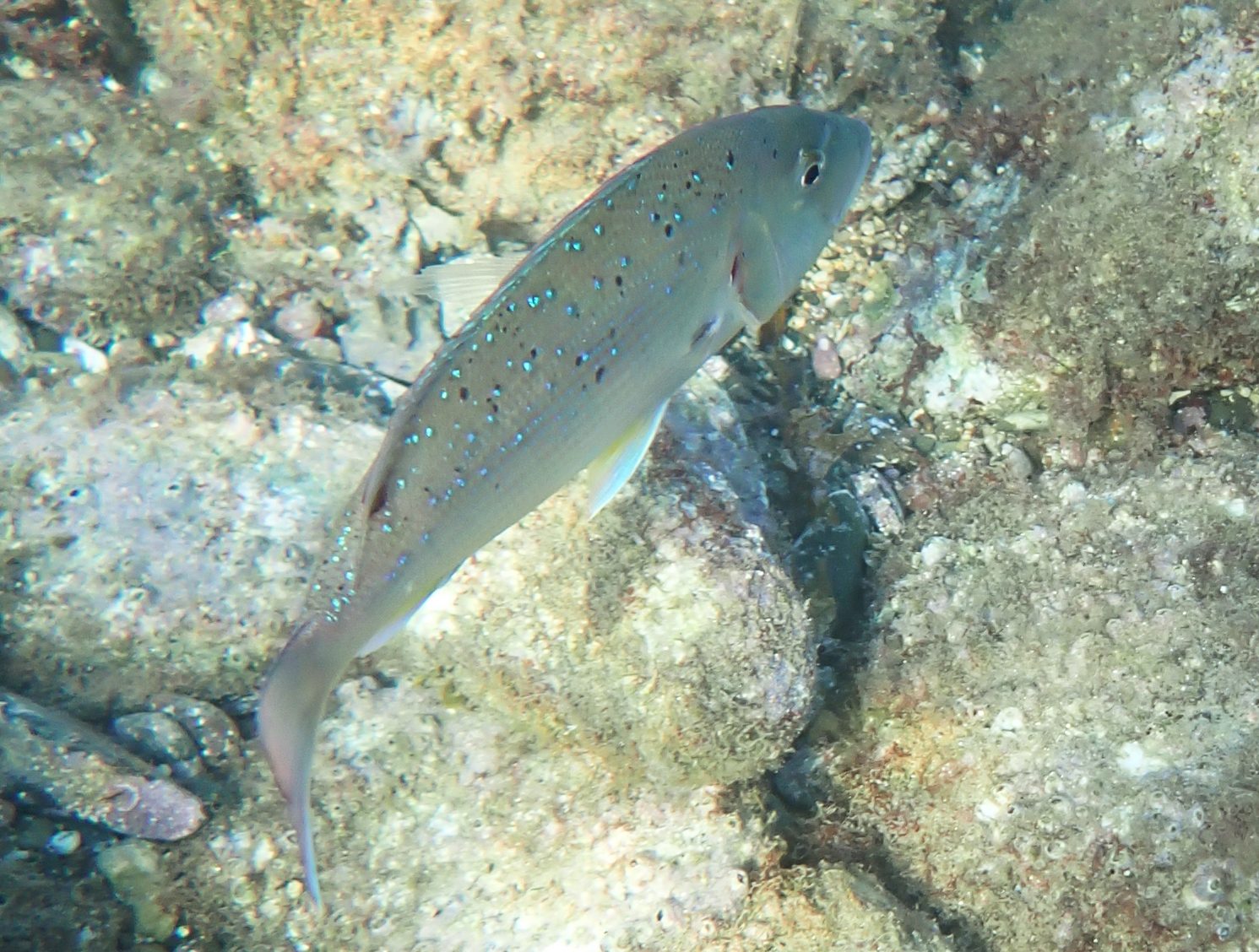
The other signature is the barracuda. Local divers describe them colonising the entire cap of the shoal, which is unusual — these fish more often hold in open water than over structure.
Also known as Secca di Spargiottello · Spargiotello (IT variant)
The Experience
The mooring ground is visible from the surface as a pale patch, and the dive begins on the broad cap in bright, moving water — often with the barracuda already there.
From the cap the route descends the north-eastern flank through the white gorgonians, then works into the narrow gorge between the main reef and the northern peaks, which drops away by twenty metres or so. The western walls are the destination: shaded, steep and densely covered. Sand patches between the rock reflect light upward and lift the whole scene. Grouper are numerous, lobster occupy the crevices, and dentex and amberjack work the open water on the seaward side.
Underwater Landscape
An extensive granite reef with a broad flat cap in very shallow water, a steep north-eastern descent, a narrow gorge between the main reef and northern peaks dropping around twenty metres, and shaded western walls. Sand patches between the rock.
Why It’s Special
- 01
Two gorgonian species zoned visibly by light and current on one reef
- 02
Barracuda schooling over the cap rather than in open water
- 03
A narrow gorge between the main reef and the northern peaks
- 04
Straightforward terrain with a very wide depth range, from three metres to thirty
Marine Life
Barracuda over the cap. Dusky grouper in numbers, spiny lobster in the crevices, with large dentex and greater amberjack toward open water. Resident and passing reef fish throughout.
Flora & Benthic Life
White gorgonian (Eunicella singularis) across the north-eastern descent; red gorgonian (Paramuricea clavata) covering the shaded western walls. Coralligenous encrustation, sponges and bryozoans on the low-light surfaces.
Best Conditions
Current can be strong and is the site's real difficulty. The shallow cap means the dive remains workable in a wider range of conditions than the deeper shoals, but the wall section needs a settled day.
Photography
The gorgonian zoning is the picture worth planning: shoot the white-gorgonian slope and the red-gorgonian wall as a deliberate pair, from the same dive, and the difference does the explaining. The barracuda over the cap is a shallow-water wide-angle opportunity with plenty of natural light behind it.
DCC Tip
Do the wall first and the cap last. The gorgonian walls are the reason to come and they are the deepest part of the site; the cap with its barracuda is shallow enough to be an extended safety stop rather than a separate objective.
Safety & Conservation
Exposed offshore reef with variable and sometimes strong current; entry point and circuit are chosen from the boat. The cap is shallow enough that swell is felt in a way it is not at the deeper shoals. Both gorgonian species are slow-growing and fragile — contact damage lasts for years. Diving here is subject to national park authorisation, current protected-area regulations and daily operational conditions.
Collections
Dive these too
La Maddalena Archipelago
Secca Washington
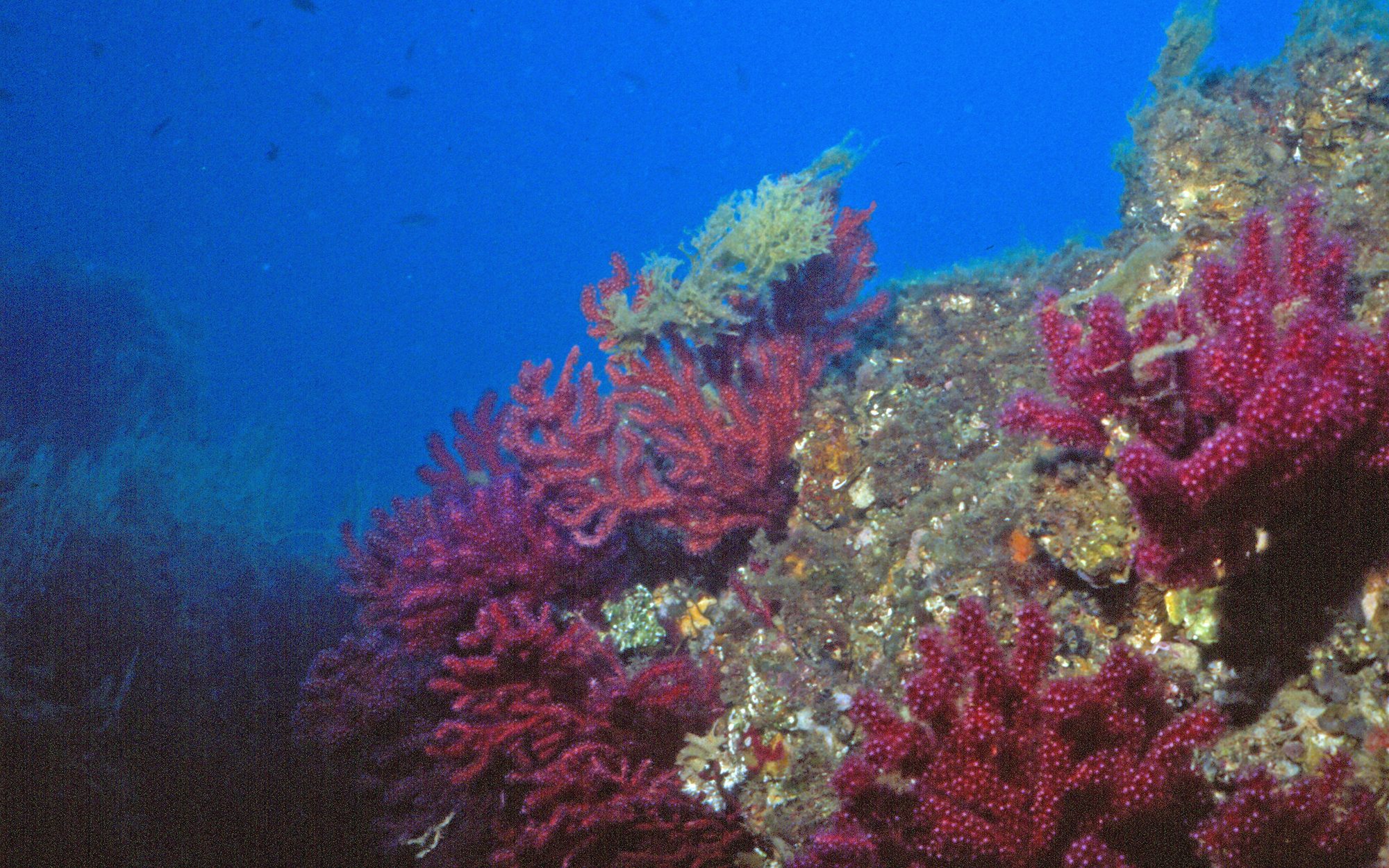
A seamount with gorgonian walls and the biggest fish here.
La Maddalena Archipelago
Barrettinelli di Fuori
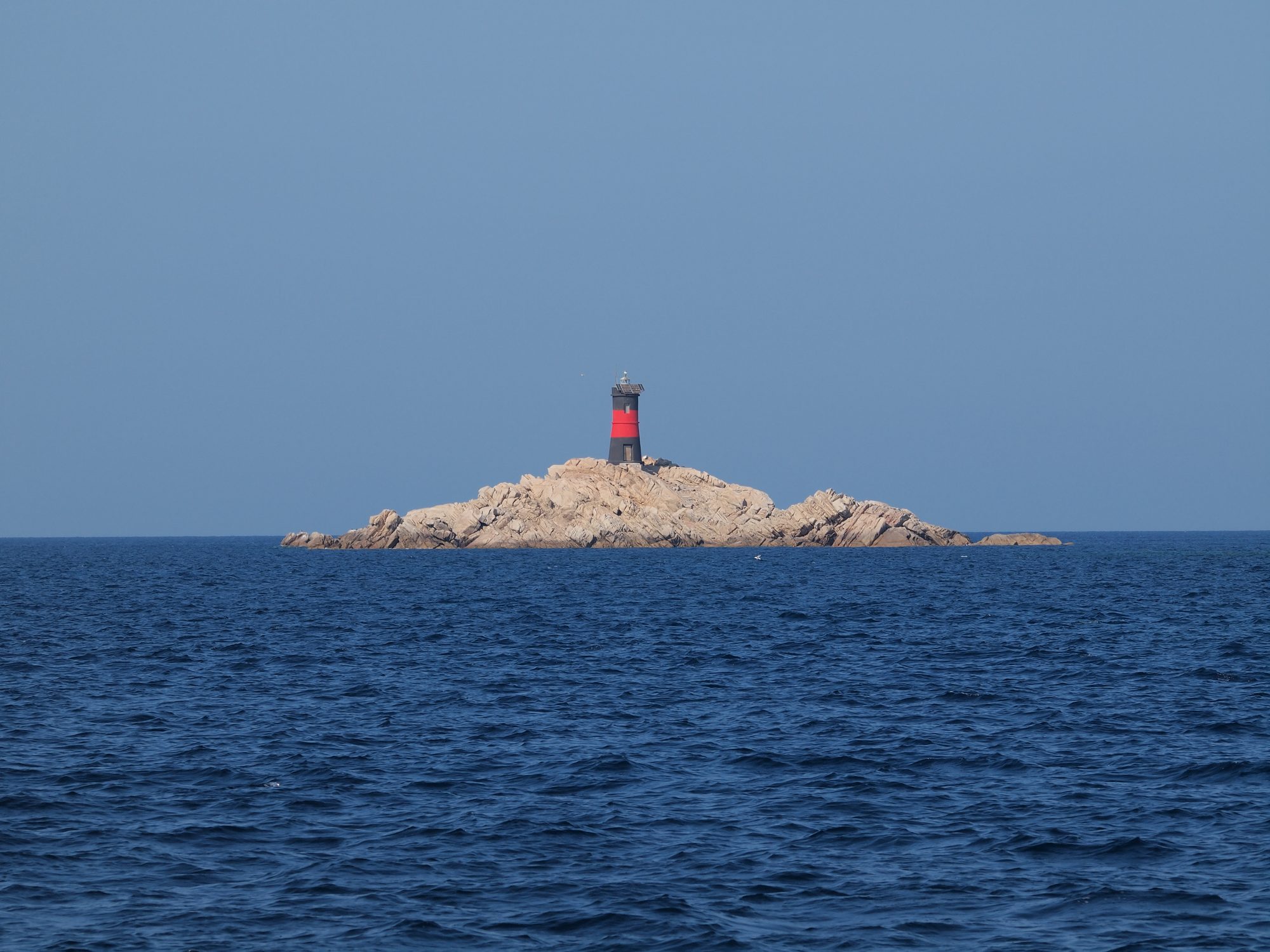
The archipelago's easiest dive, and the closest to Cavallo.
La Maddalena Archipelago
Picchi di Coticcio
Pink granite spires rising almost to the surface, in still water.