Caprera — north-eastern tip
Picchi di Coticcio
Pink granite spires rising almost to the surface, in still water.
- Depth
- 8–40 m depending on itinerary
- Certification
- Open Water — Advanced recommended
- Experience
- Intermediate
- Current
- Low
- Dive Style
- Granite Reef · Wall · Pinnacle / Shoal
How we rate
Our ratings compare the twenty-eight dives in this Explorer with one another; they are not universal scores. They show where each site stands within the DCC selection for photography, scenery and marine life, and five represents the strongest expression of that quality.
The Dive
The north-eastern tip of Caprera is one of the most photographed places in Sardinia above water, and it continues underwater with the same rock and the same colour. This is pink granite — enormous rounded masses of it — arranged into steep walls, boulder collapses and, at the northern end, a group of spires that climb from around thirty metres almost to the surface. Those spires are what give the site its name.
It runs along roughly four hundred metres of coast and offers several different dives. A shallow route over the pinnacles between eight and eighteen metres is genuinely approachable. The walls and ridges beyond thirty metres are not, and they are where the archipelago's best red gorgonians grow.
What makes Coticcio unusual in this area is the water: current here is described as essentially absent, which is not true of anywhere else in the La Maddalena section of this catalogue. It is the sheltered counterweight to Washington and Monaci — the same granite, the same park, without the exposure.
Also known as Punta Coticcio (IT)
The Experience
The pink of the rock is the first thing you notice and it does not fade with depth the way you expect; it holds its colour under a torch in a way grey granite does not.
Divers staying shallow work the spires, which rise as separate towers with bright sand between them — a landscape of vertical objects rather than a wall. Divers going deeper follow the boulder collapses down the ridges to where the gorgonian fans start, and the character changes completely: steeper, darker, and colder. Grouper are numerous here and have recovered visibly since fishing was restricted; moray, lobster and octopus occupy the rock, and amberjack, dentex and barracuda pass on the open side.
Underwater Landscape
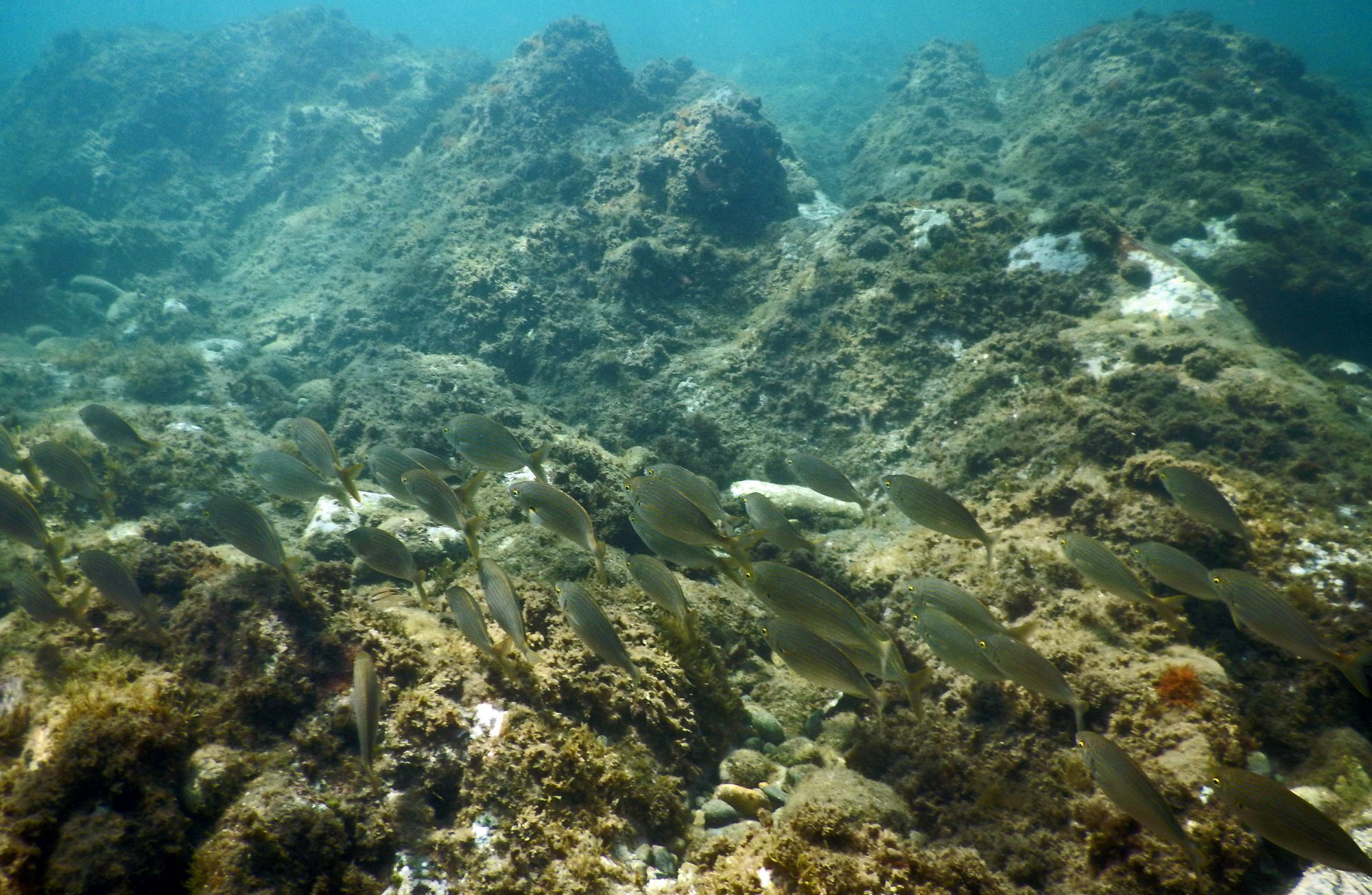
Massive pink granite along roughly four hundred metres of coast: steep walls, boulder collapses and ridges descending to around forty-five metres, with a shallow shoal at eight to eighteen metres and a group of spires rising from around thirty metres to near the surface. Bright sand between the rock.
Why It’s Special
- 01
Pink granite spires rising from around thirty metres almost to the surface
- 02
Effectively still water — the sheltered alternative to the archipelago's exposed shoals
- 03
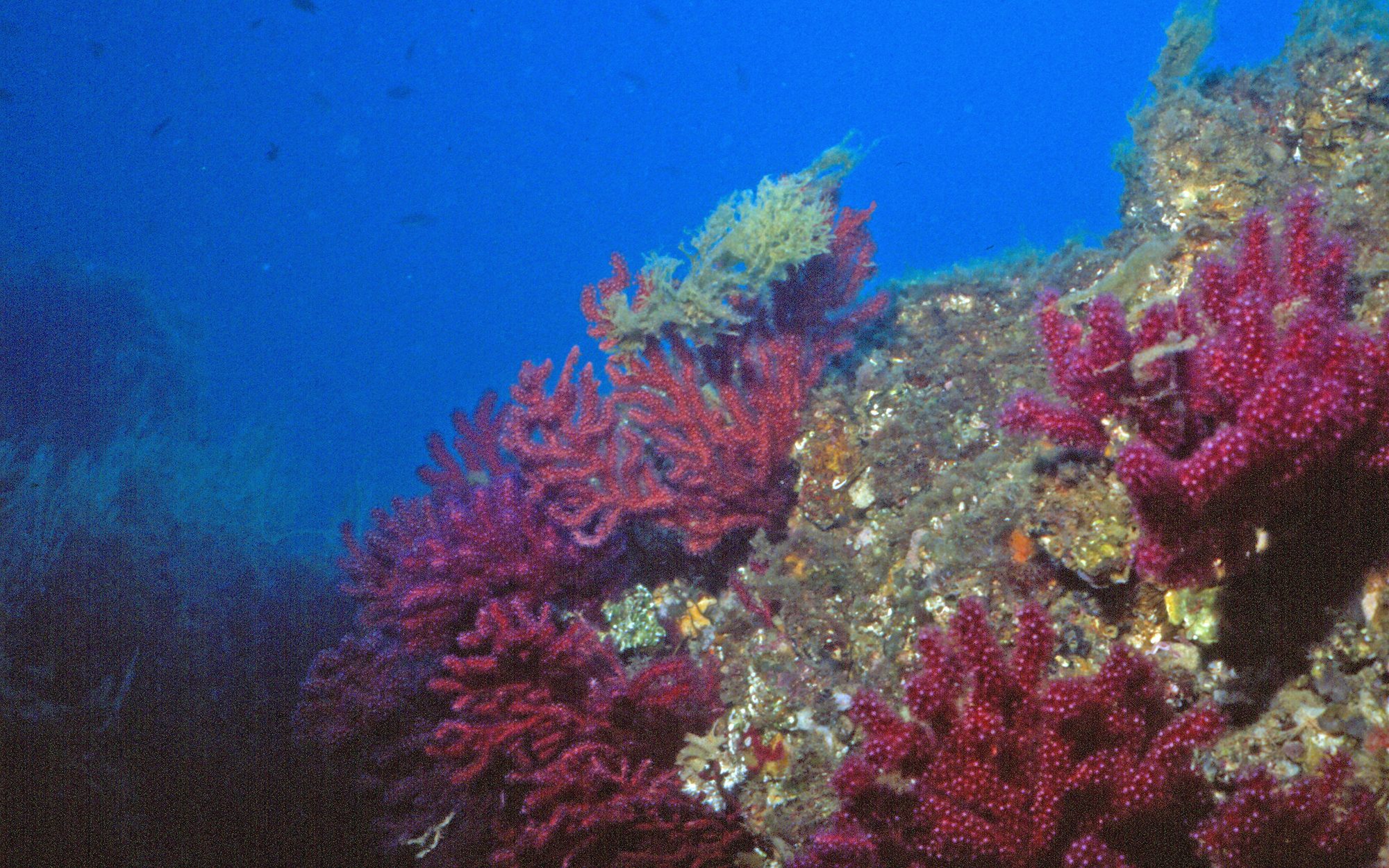
Large red gorgonians on the deeper ridges, among the best in the archipelago
- 04
Several genuinely different routes on one site, from eight metres to forty
- 05
The underwater continuation of one of Sardinia's most recognisable landscapes
Marine Life
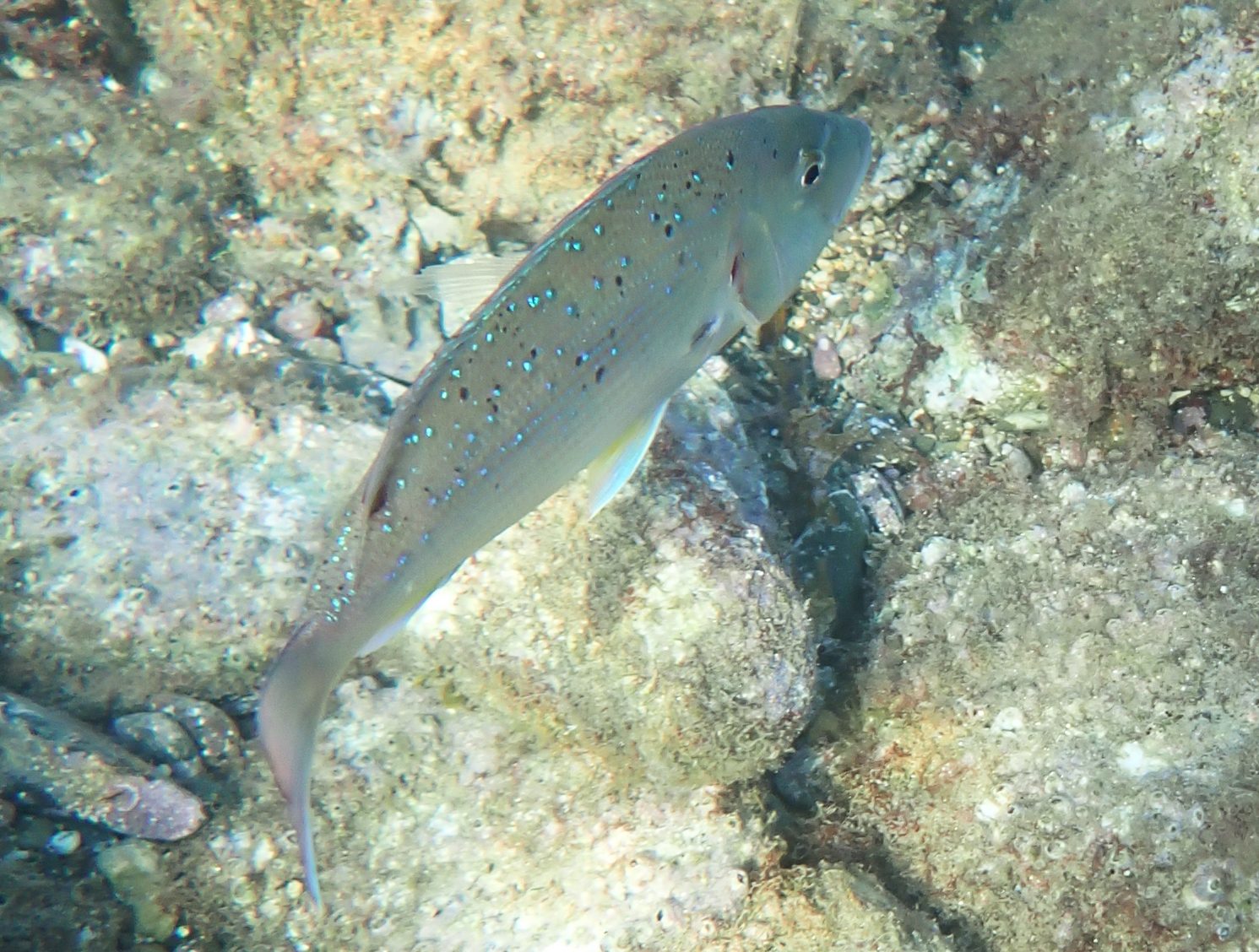
Dusky grouper in numbers, moray, spiny lobster and octopus on the rock. Amberjack, common dentex and barracuda in the open water off the walls. Damselfish and seabream over the shallower ground.
Flora & Benthic Life
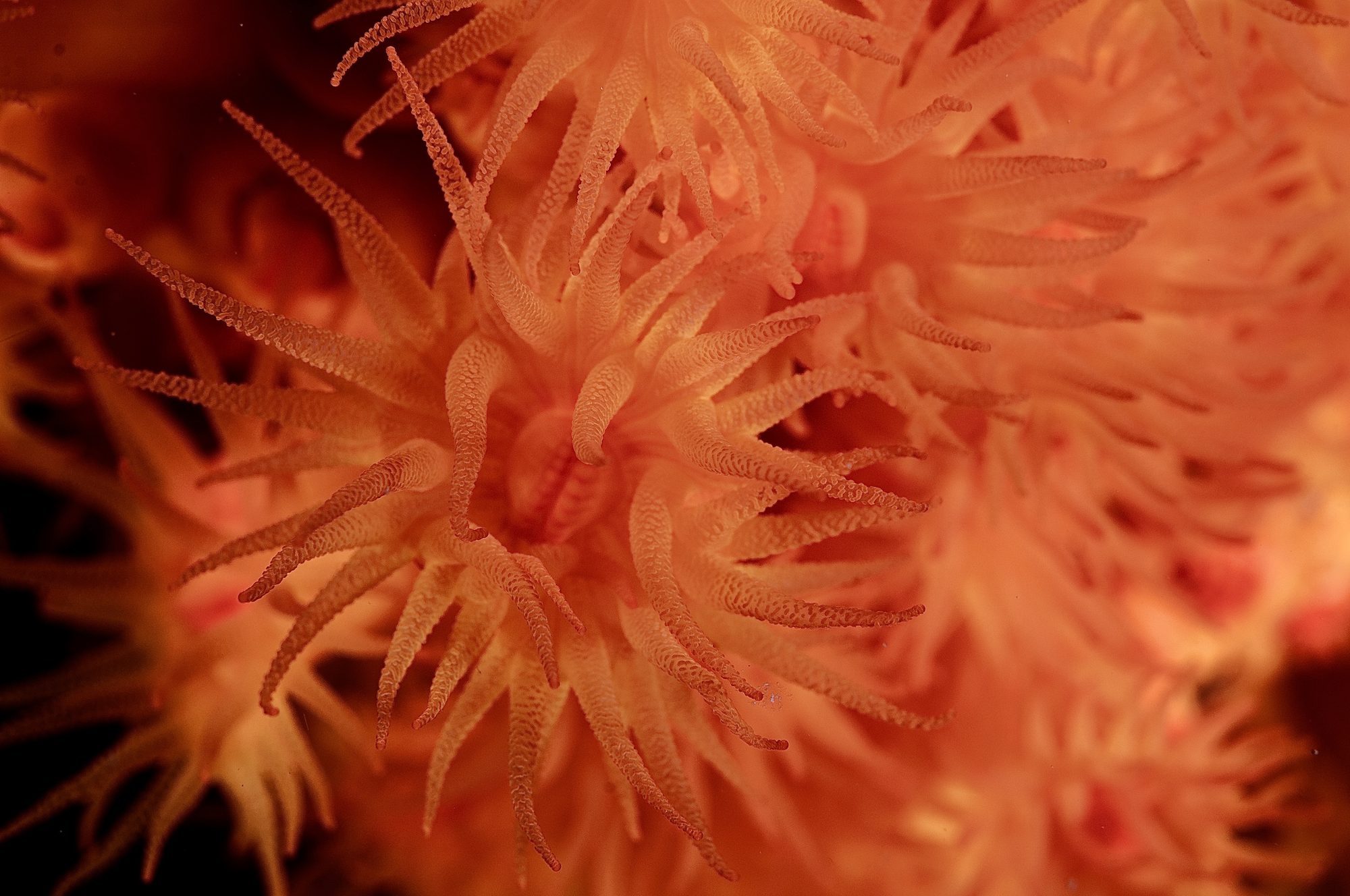
Red gorgonian (Paramuricea clavata) on the deeper ridges beyond about thirty metres — the largest specimens reported in the archipelago. Coralligenous encrustation, sponges and bryozoans on the shaded faces; photophilic algae on the sunlit spires.
Best Conditions
Current is generally absent, which makes this the most dependable of the La Maddalena sites and the one to choose when the offshore shoals are unworkable. Bright conditions matter for the shallow route, where the colour is the point. Good visibility opens up the walls.
Photography
Five stars for one reason: the colour. Pink granite, bright sand and blue water is a palette no other site in this catalogue offers, and it photographs in natural light between eight and eighteen metres where most Mediterranean wide angle needs strobes. Shoot the spires from below with a diver between them. Deeper, the gorgonian ridges need artificial light and are a different picture entirely — plan one or the other, not both.
DCC Tip
Choose your dive before you enter the water. Coticcio offers a bright shallow pinnacle dive and a dark deep gorgonian dive, and they are genuinely different experiences on the same site — trying to do both in forty minutes produces a mediocre version of each.
Safety & Conservation
The absence of current makes this an easy dive and that is precisely why depth discipline matters: the ridges continue to forty-five metres and beyond, with nothing to stop a gradual descent. Maximum depth is fixed before entry. The deep gorgonian ridges are the site's most valuable and most fragile feature — no contact, careful trim, and no settling on the rock to steady a camera. Keep the beach regulations and the dive regulations separate: shore access at Cala Coticcio is separately controlled. Diving here is subject to national park authorisation, current protected-area regulations and daily operational conditions.