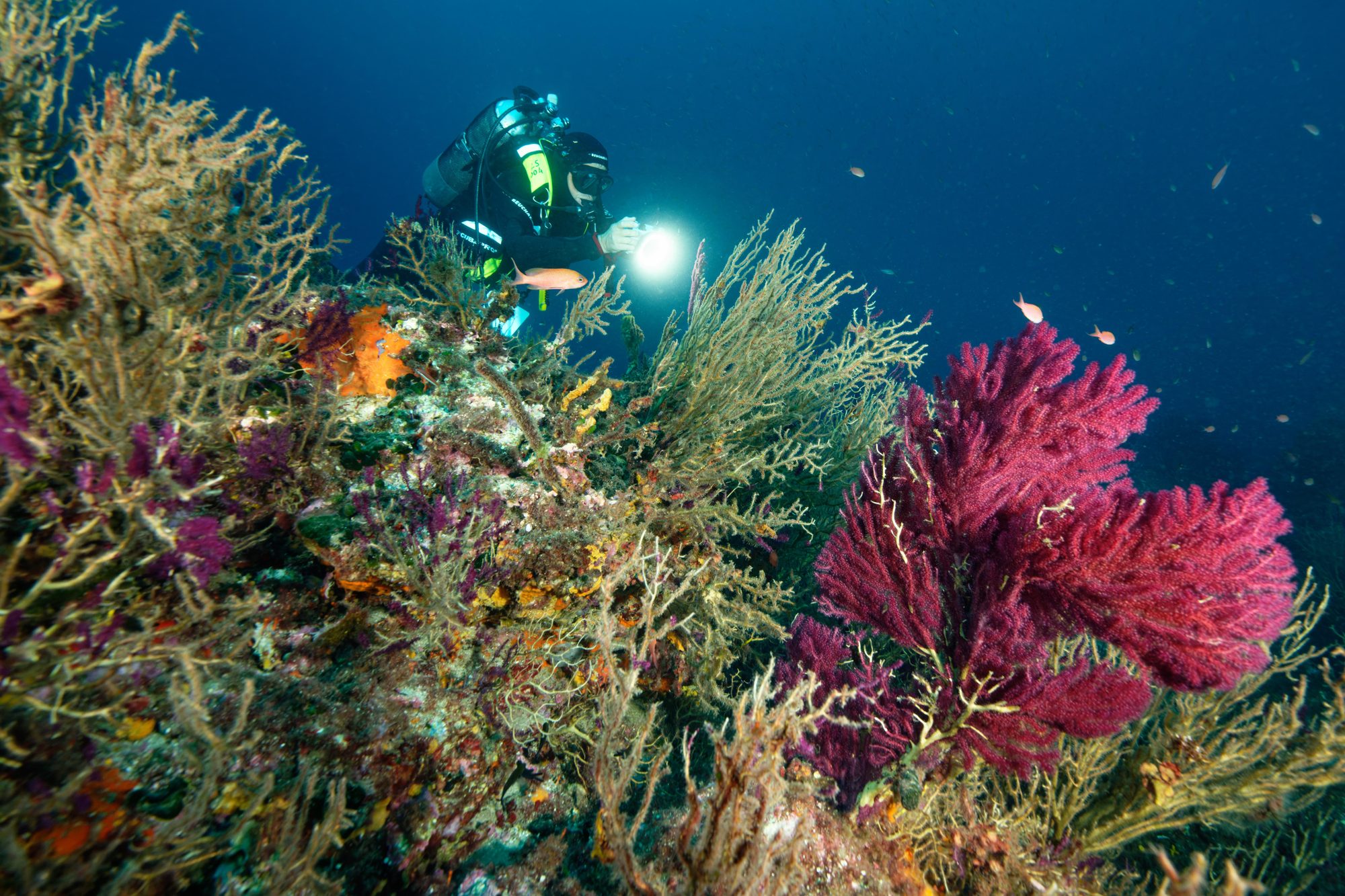
Offshore shoal, Santa Teresa Gallura
Secca degli Ombrelli
A single column of granite standing forty metres off the bottom.
- Depth
- 8–40 m depending on itinerary
- Certification
- Advanced — Deep recommended
- Experience
- Advanced
- Current
- Potentially Strong
- Dive Style
- Pinnacle / Shoal · Coralligenous Reef
How we rate
Our ratings compare the twenty-eight dives in this Explorer with one another; they are not universal scores. They show where each site stands within the DCC selection for photography, scenery and marine life, and five represents the strongest expression of that quality.
The Dive
Most of the diving in this catalogue is on reefs — extended structures you travel along. This is a pillar. It rises vertically from a bottom at around forty metres to within eight of the surface, and the dive consists of going round it and coming up it.
That geometry produces the most complete vertical section available anywhere in this catalogue. At the base you are on coralligenous rock in low light, among gorgonians and shade-dwelling organisms. At the top you are in bright water with algal turf and schooling fish. Everything in between happens in order, on one structure, and you can watch the community change as you rise.
The shoal belongs to the older history of diving in the Strait: it is associated locally with the first generation of divers who worked this coast for red coral, before the current protection regime existed. That is part of why it is known and part of why it still carries what it does.
The Experience
You go down the outside of the column to the deepest point you have planned for, and from there the dive organises itself. A slow spiral upward keeps depth falling continuously while you work round the faces.
The faces are not equivalent. The current-exposed side carries the gorgonian growth and the fish traffic; the sheltered side is quieter and more cryptic. A complete circuit at each of two or three levels shows you both. Grouper are present on the structure, and larger fish work the water off the exposed flank.
Underwater Landscape
An isolated granite pillar rising from around forty metres to eight, with vertical and overhanging faces, ledges, and debris at the base. Strong relief, no surrounding shelter.
Why It’s Special
- 01
A free-standing granite column with roughly thirty metres of vertical relief
- 02
A complete depth gradient of Mediterranean reef communities on one structure
- 03
A self-managing spiral profile — depth decreases continuously without the diver deciding
- 04
Substantial gorgonian growth on the current-facing side
- 05
A site connected to the early history of diving in the Strait
Marine Life
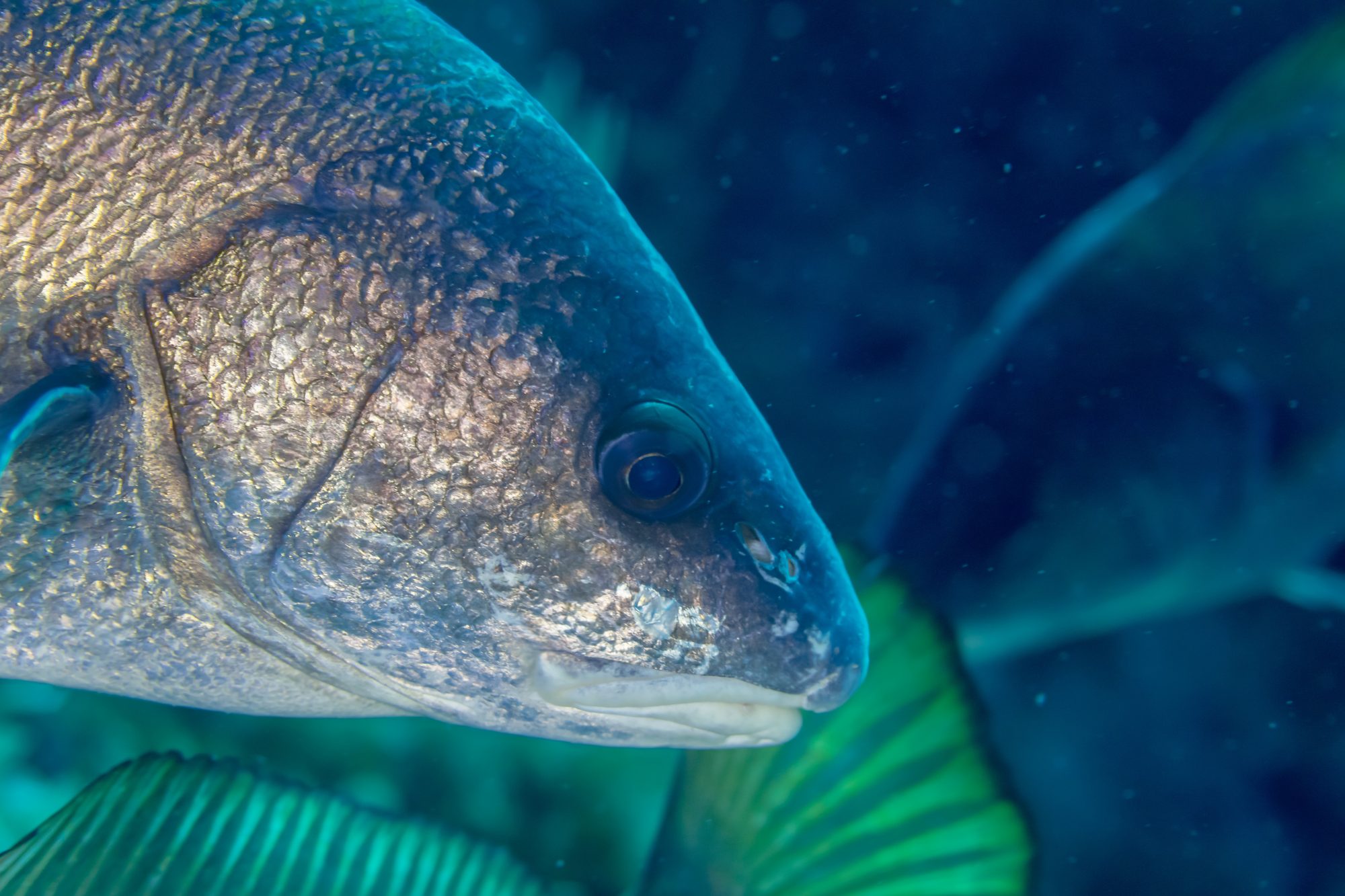
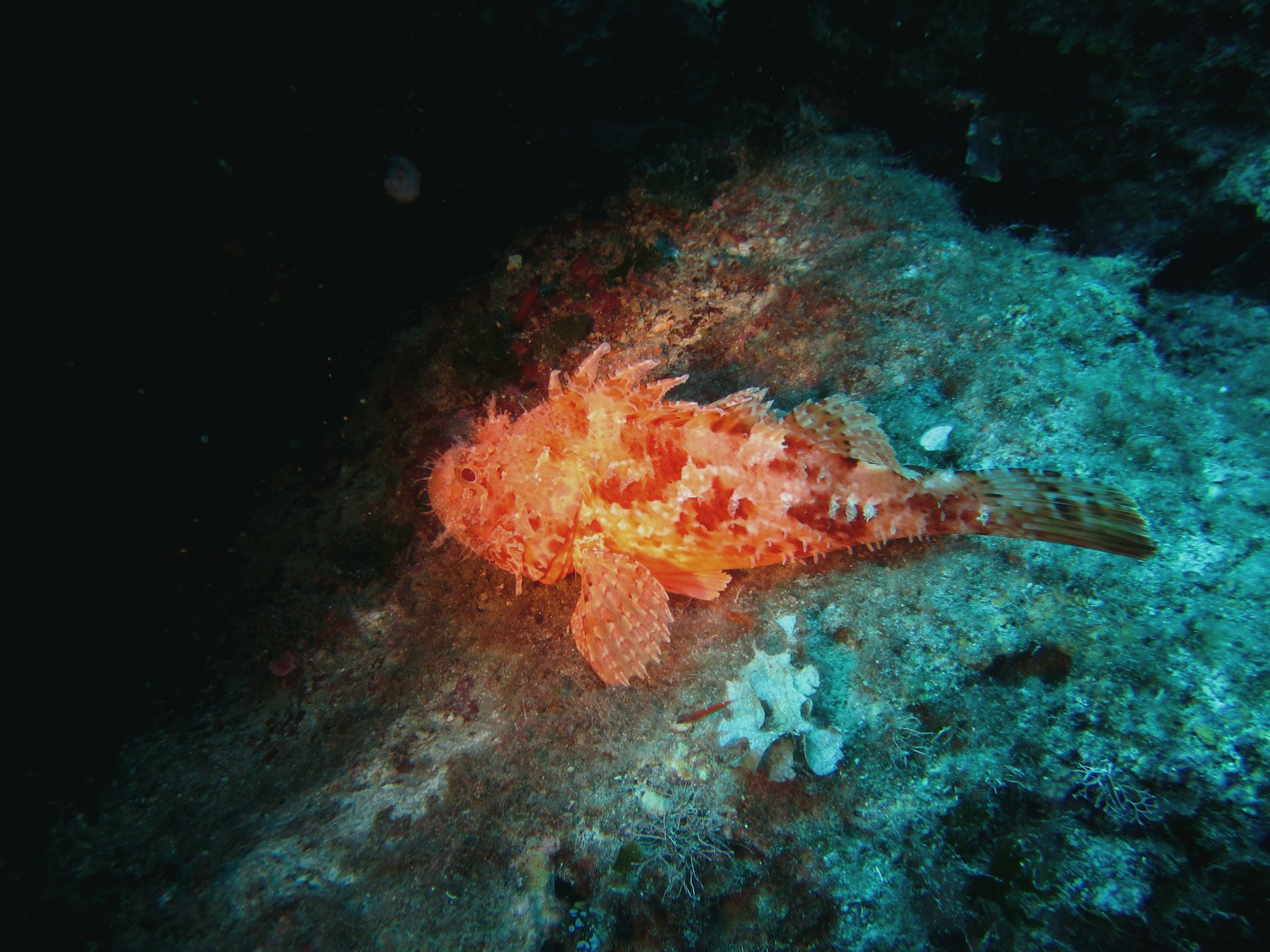
Dusky grouper on the structure; dentex, brown meagre and amberjack reported off the exposed faces; moray and crustaceans in the ledges; damselfish over the summit.
Flora & Benthic Life
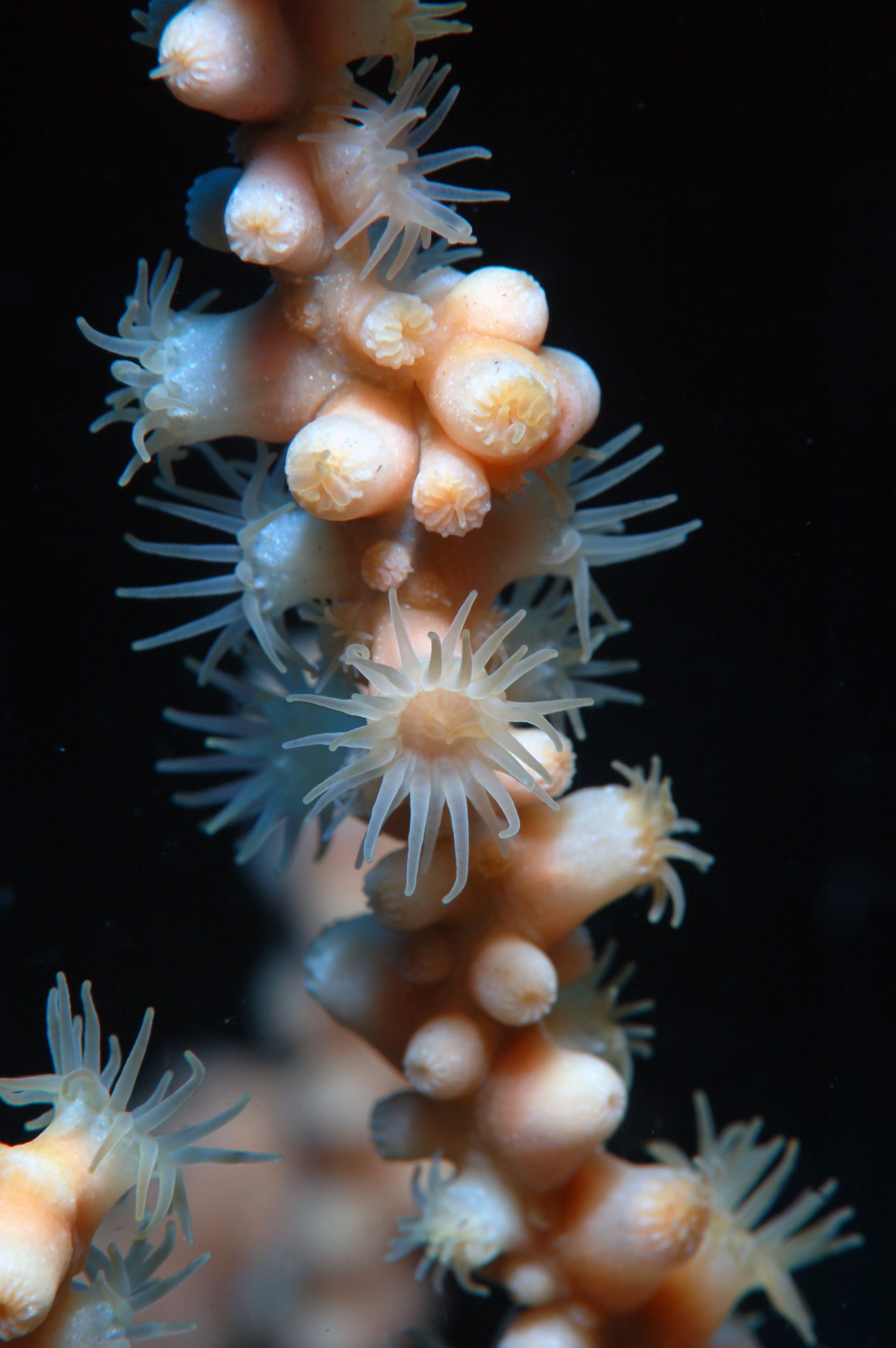
Large gorgonians on the deeper current-exposed faces, with coralligenous encrustation, sponges and bryozoans below. Photophilic algal cover on the summit.
Best Conditions
An offshore shoal with medium-to-strong current at times. Because it is a vertical structure, the current is uneven around it and the sheltered aspect changes with the flow; the guide selects the entry side from the boat. Settled conditions matter more than visibility.
Photography
The only site here where you can photograph a whole underwater landform. Back off the column and shoot it as an object with a diver alongside for scale — most Mediterranean wide angle fails because there is nothing to establish size, and here there is. On the deep faces, gorgonian fans shot upward against the open water above are the reliable alternative.
DCC Tip
Do your deepest circuit first and do it fast, then slow down. The bottom of the column costs the most gas and the most time, and divers who linger there end up racing past the best-lit thirty metres of the site with an eye on their computer.
Safety & Conservation
An exposed offshore pinnacle with a deep base: maximum depth is fixed before entry and the ascent is continuous. Current accelerates around the column's shoulders and can differ substantially between faces. Surface marker buoys are carried. Gorgonians break on contact and grow back over years — no handholds on the wall. Red coral, where present in this sector, is protected: never touched, never collected, never located publicly. Access is subject to current protected-area regulations and daily operational conditions.