Capo Testa
Monte Regalo
Capo Testa's granite, stacked into corridors you can swim.
- Depth
- 15–35 m depending on itinerary
- Certification
- Advanced
- Experience
- Intermediate
- Current
- Low
- Dive Style
- Granite Reef · Cavern Formations · Coralligenous Reef
How we rate
Our ratings compare the twenty-eight dives in this Explorer with one another; they are not universal scores. They show where each site stands within the DCC selection for photography, scenery and marine life, and five represents the strongest expression of that quality.
The Dive
Above water, Capo Testa looks like a sculpture park: wind and salt have worked the granite into hollows, columns and balanced masses that seem deliberate. Monte Regalo is what that process produces underwater, and it is the site local divers reach for when asked what the marine protected area is actually about.
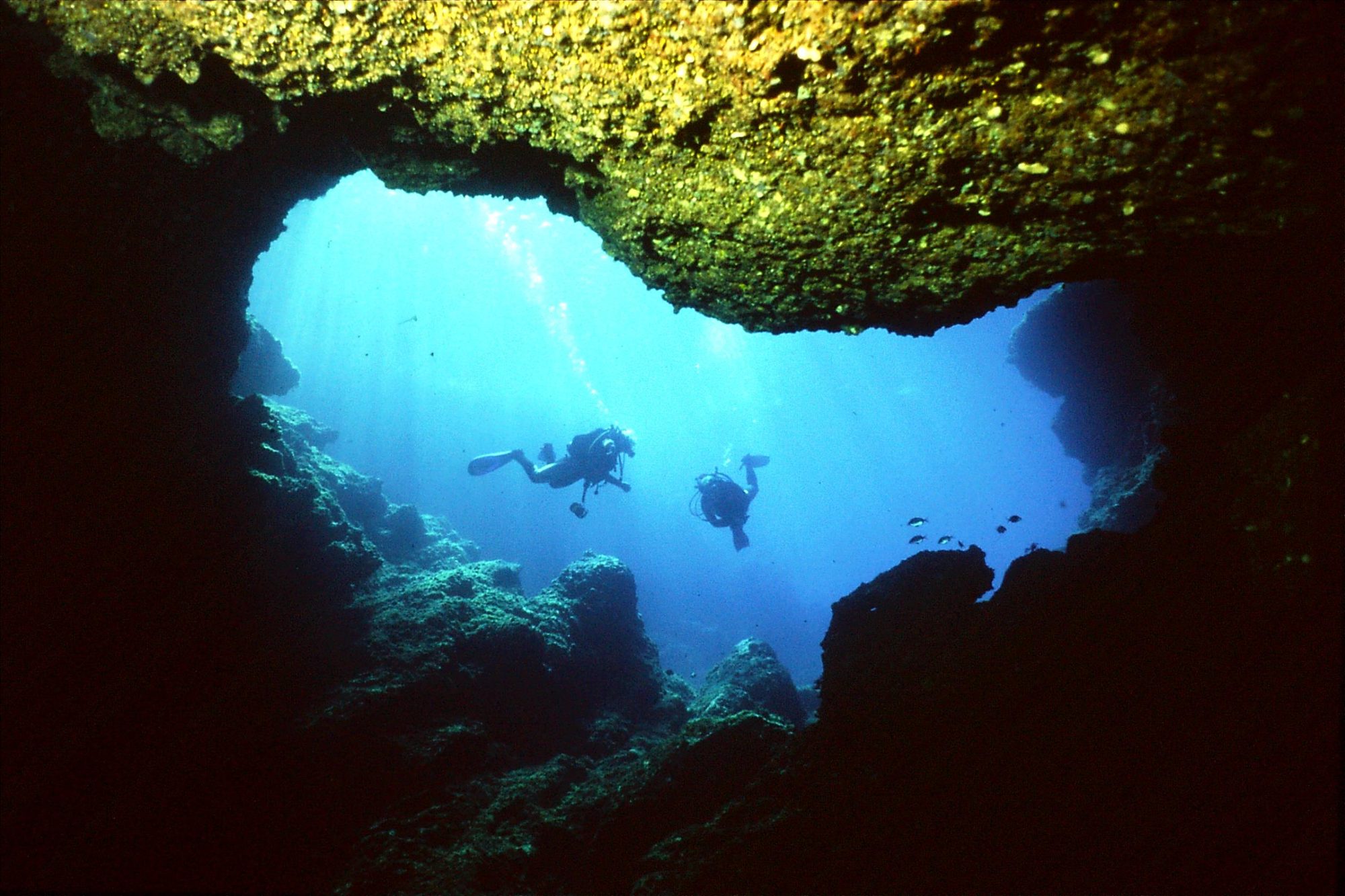
The reef is built of monoliths — very large granite blocks resting on one another, with corridors, openings and dead ends between them. You navigate it rather than survey it. Every few metres the rock closes in and then releases you into open water again.
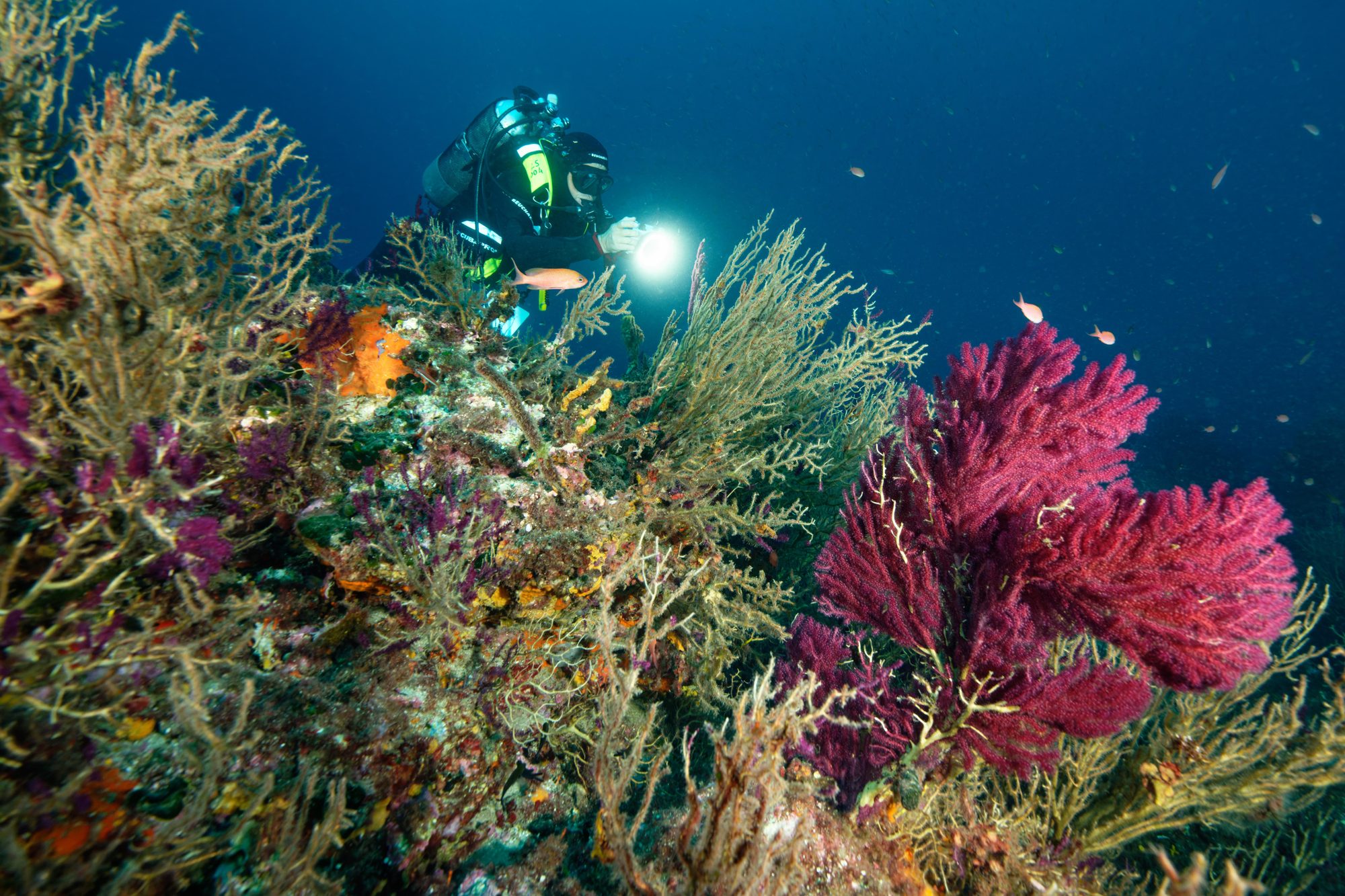
Deeper, the character shifts. As light drops, the surfaces stop being bare granite and start carrying the coralligenous communities that define Mediterranean hard bottoms: encrusting red algae, sponges, bryozoans, and — from around twenty metres — red coral in the fissures and under the overhangs. That transition, from bright architecture to shaded biology in a single dive, is the reason to come.
Also known as Corallo Rosso — Monte Regalo (IT, operator usage)
The Experience
The early part of the dive is spatial. You follow the guide through gaps that look too narrow and are not, past openings that frame other openings, with the depth staying moderate and the light strong.
Going deeper reverses the emphasis. The passages widen, the walls darken, and the interest moves from where you are to what is on the rock beside you. Grouper occupy the recesses at this level; brown meagre and dentex work the outer faces. It is worth carrying a torch for the last third of the dive even though the first two thirds do not need one.
Underwater Landscape
Stacked granite monoliths forming corridors, openings, dead-end recesses and low walls, descending from mid-depth to around thirty-five metres, with coralligenous colonisation increasing with depth and shade.
Why It’s Special
- 01
Monolithic granite architecture with genuine swim-through corridors
- 02
A legible transition from photophilic shallow rock to coralligenous deep reef within one dive
- 03
Red coral present in the fissures below about twenty metres
- 04
A profile that can be run shallow or deep for the same site without losing its character
Marine Life
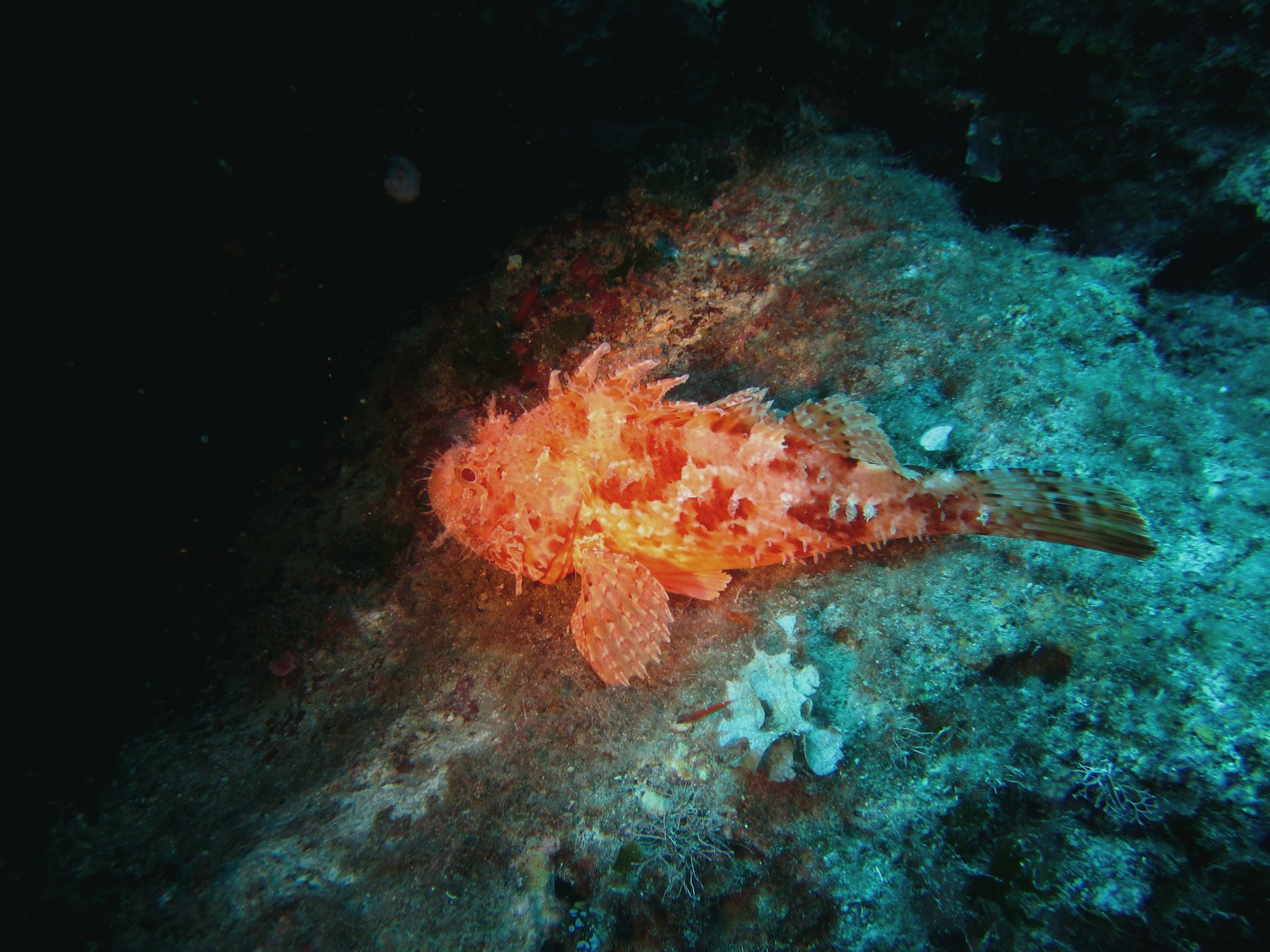
Dusky grouper, brown meagre, common dentex, moray, scorpionfish and damselfish are all reported here, with the crevice fauna typical of granite reefs.
Flora & Benthic Life
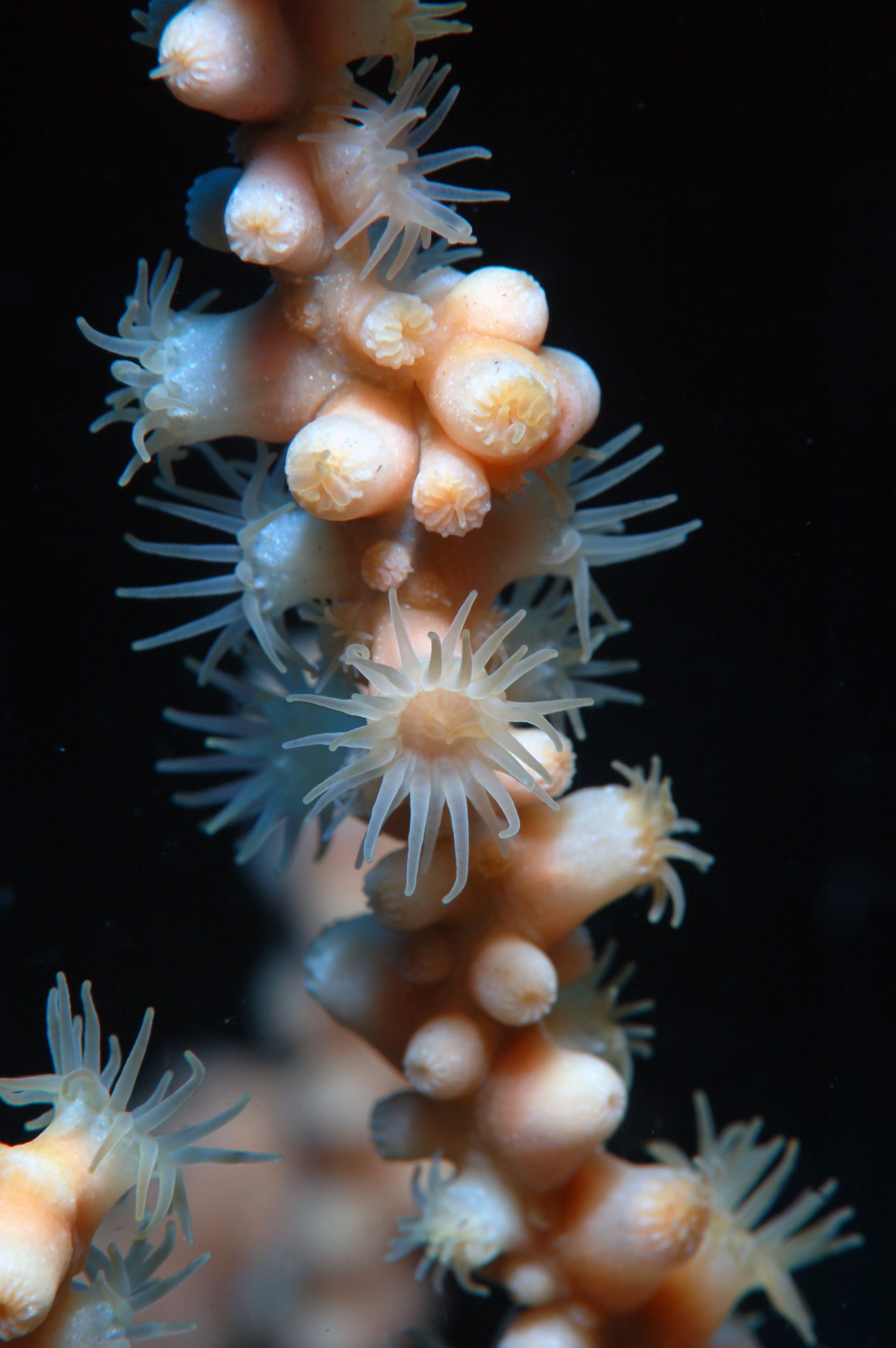
Coralligenous communities on the deeper and shaded surfaces: encrusting calcareous red algae, sponges, bryozoans, yellow cluster anemone. Red coral (Corallium rubrum) occurs in the fissures and beneath overhangs from around twenty metres — a protected, very slow-growing species which divers may look at and must never touch or collect.
Best Conditions
Generally sheltered with weak or absent current, which makes it one of the more dependable Sardinian sites. Good visibility helps the corridors read properly; the deeper section is largely unaffected by surface conditions.
Photography
The corridors are the subject. Shoot along them with a diver entering from the far end, and let the granite walls compress the frame — this is the one site in the Sardinian block that produces a genuine sense of enclosure. Deeper, switch to macro on the coralligenous surfaces rather than trying to light a whole wall.
DCC Tip
Keep your arms in and your trim flat through the passages, and resist the urge to grab the walls for stability. The rock here is not bare — much of what looks like stone is a living crust that took decades to form.
Safety & Conservation
The passages are swim-throughs with visible exits, not an overhead environment, and the route is set by the guide according to the group's certification and comfort. Precise buoyancy is required: contact damage to coralligenous crusts is permanent on any human timescale. Red coral is a protected species subject to strict harvesting regulation — it is observed and left alone, and its exact locations are never published. Access is subject to current protected-area regulations and daily operational conditions.
Collections
Dive these too
Capo Testa & Punta Falcone
Grotta della Cernia
Granite spires and shaded passages, with the best light here.
Capo Testa & Punta Falcone
Secca degli Ombrelli
A granite column standing forty metres off the bottom.
Capo Testa & Punta Falcone
Corallo Nero
A deep coralligenous reef holding a notable Savalia colony.