Punta Falcone
Punta Falcone
The northernmost rock in Sardinia, facing the Strait head-on.
- Depth
- 4–40 m depending on itinerary
- Certification
- Advanced
- Experience
- Intermediate
- Current
- Moderate
- Dive Style
- Offshore Reef · Granite Reef
How we rate
Our ratings compare the twenty-eight dives in this Explorer with one another; they are not universal scores. They show where each site stands within the DCC selection for photography, scenery and marine life, and five represents the strongest expression of that quality.
The Dive
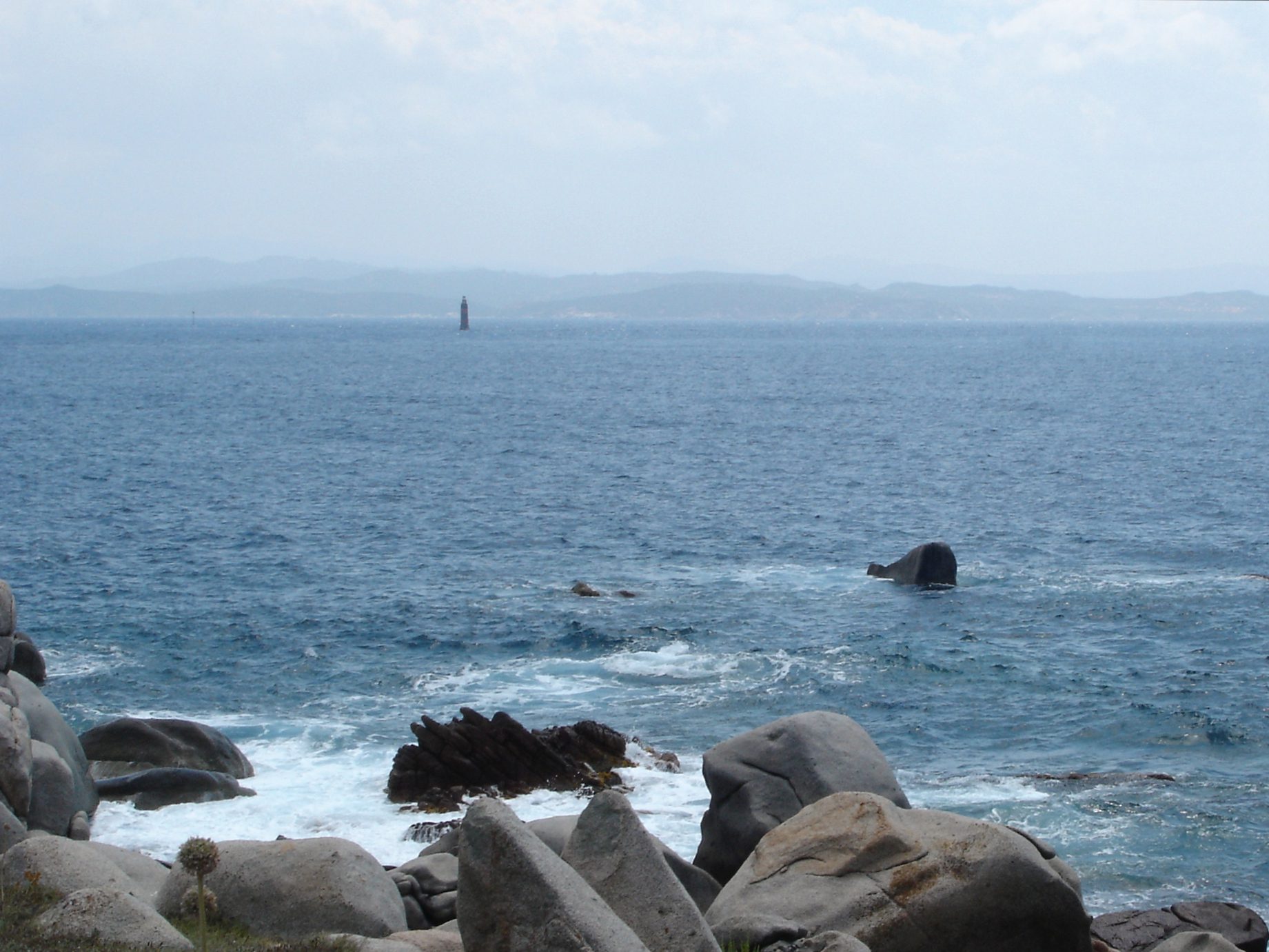
Punta Falcone is where Sardinia stops. The promontory projects further north than any other point on the island, directly into the Strait of Bonifacio, and the reef beneath it is exposed to everything that moves through the channel.
Underwater it is a series of shoals rather than one structure, stepping down from very shallow rock to around forty metres. The exposure is the defining variable: water moves here constantly, which keeps the reef clean and well fed and brings fish in from open water, and which also means the site is dived on the days the Strait allows rather than on the days it is scheduled.
Local divers report that both ancient artefacts and material from the modern wars turn up on this ground — the inevitable consequence of a position that every vessel passing between the Tyrrhenian and the western Mediterranean has had to round for as long as there has been shipping.
The Experience
The dive works down the stepped shoals, taking shelter behind structure where the flow is strongest and moving out into it where it is not. The rhythm is dictated by the water rather than by the plan.
Close to the rock, the reef is a standard well-flushed granite community. Away from it there is the Strait itself — open, dark blue, and genuinely empty for long stretches, which makes the occasional passing fish more significant than it would be elsewhere. This is one of the two or three sites in the catalogue where the horizon matters as much as the reef.
Underwater Landscape
A series of granite shoals stepping from shallow rock down to around forty metres, exposed on the northern aspect, with open water on the seaward side.
Why It’s Special
- 01
The northernmost point of Sardinia, facing the Strait directly
- 02
Stepped shoals covering a very wide depth range on one dive site
- 03
Constant water movement, producing clean, well-fed reef surfaces
- 04
Reported artefacts of both ancient and twentieth-century origin on this ground
Marine Life
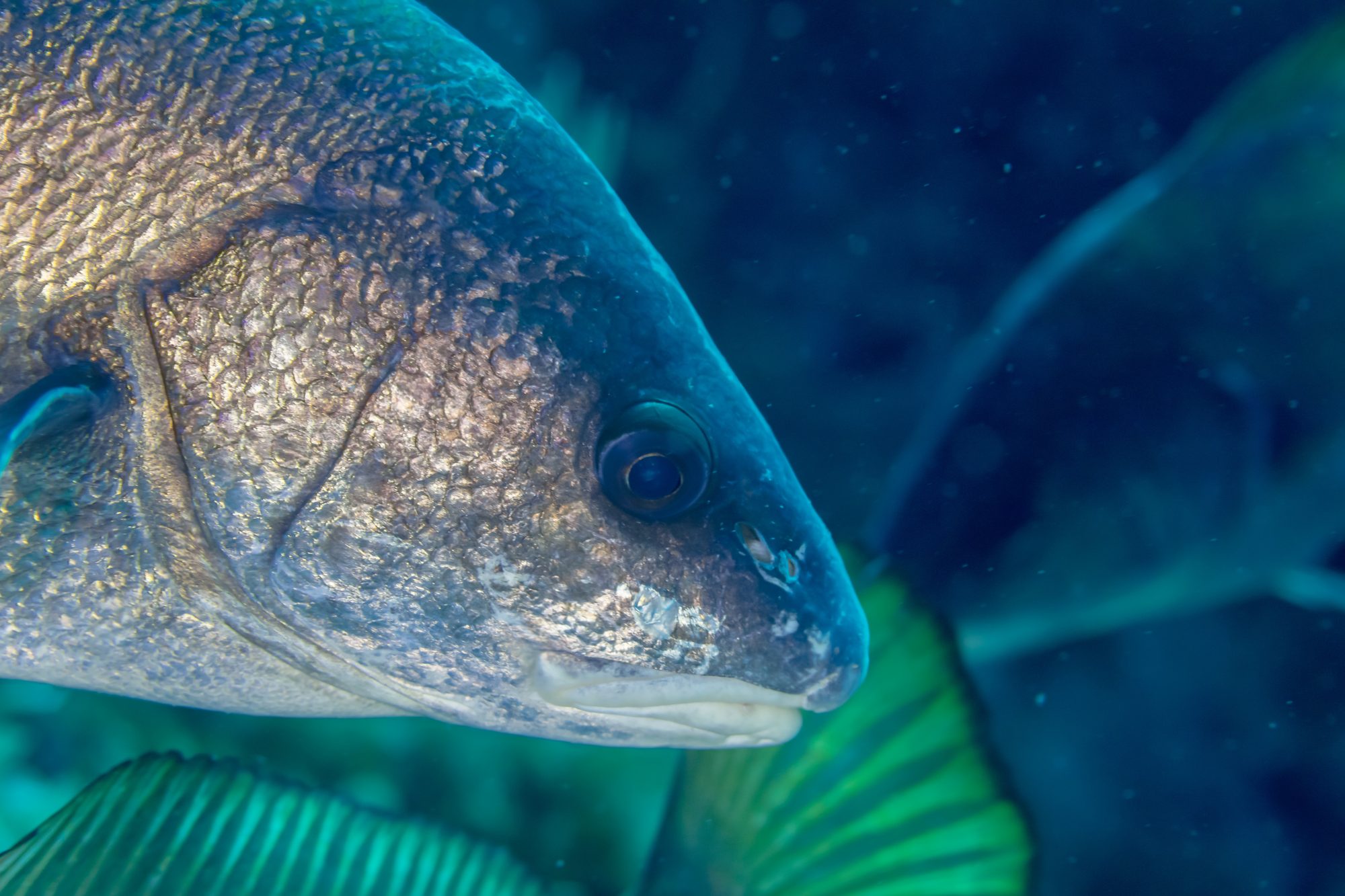
The reef community of a well-flushed granite bottom. Specific species are not itemised by the available sources for this site, and none are claimed here; expect the assemblage described elsewhere in this sector, with a greater likelihood of larger fish arriving from open water.
Flora & Benthic Life
Encrusting communities on the current-exposed rock, with shade-dwelling organisms beneath the overhangs and on the deeper faces.
Best Conditions
The most exposed Sardinian site in the catalogue. It needs a settled day and it is often unavailable. Current is moderate and rises with the wind; because circulation in the Strait is wind-driven, the direction changes with the weather regime.
Photography
Three stars: the site's quality is atmospheric rather than photographic, and open blue water is a difficult background. The image worth working for is a diver against the stepped reef with the Strait behind — a picture about position rather than about a subject.
DCC Tip
Treat the shallow end as the reward, not the leftover. The stepped shoals reach within a few metres of the surface, and the last fifteen minutes in bright, moving water over clean rock are often better than the deep section everyone plans the dive around.
Safety & Conservation
An exposed cape with a wide depth range: maximum depth is fixed before entry, the group stays together, and surface marker buoys are carried. Current strengthens with the wind and can change during the dive. Artefacts of any period are protected — look, don't touch. Nothing is to be moved or removed. Material of twentieth-century military origin must never be touched or disturbed under any circumstances, and should be reported to the guide. Access is subject to current protected-area regulations and daily operational conditions.
Collections
Dive these too
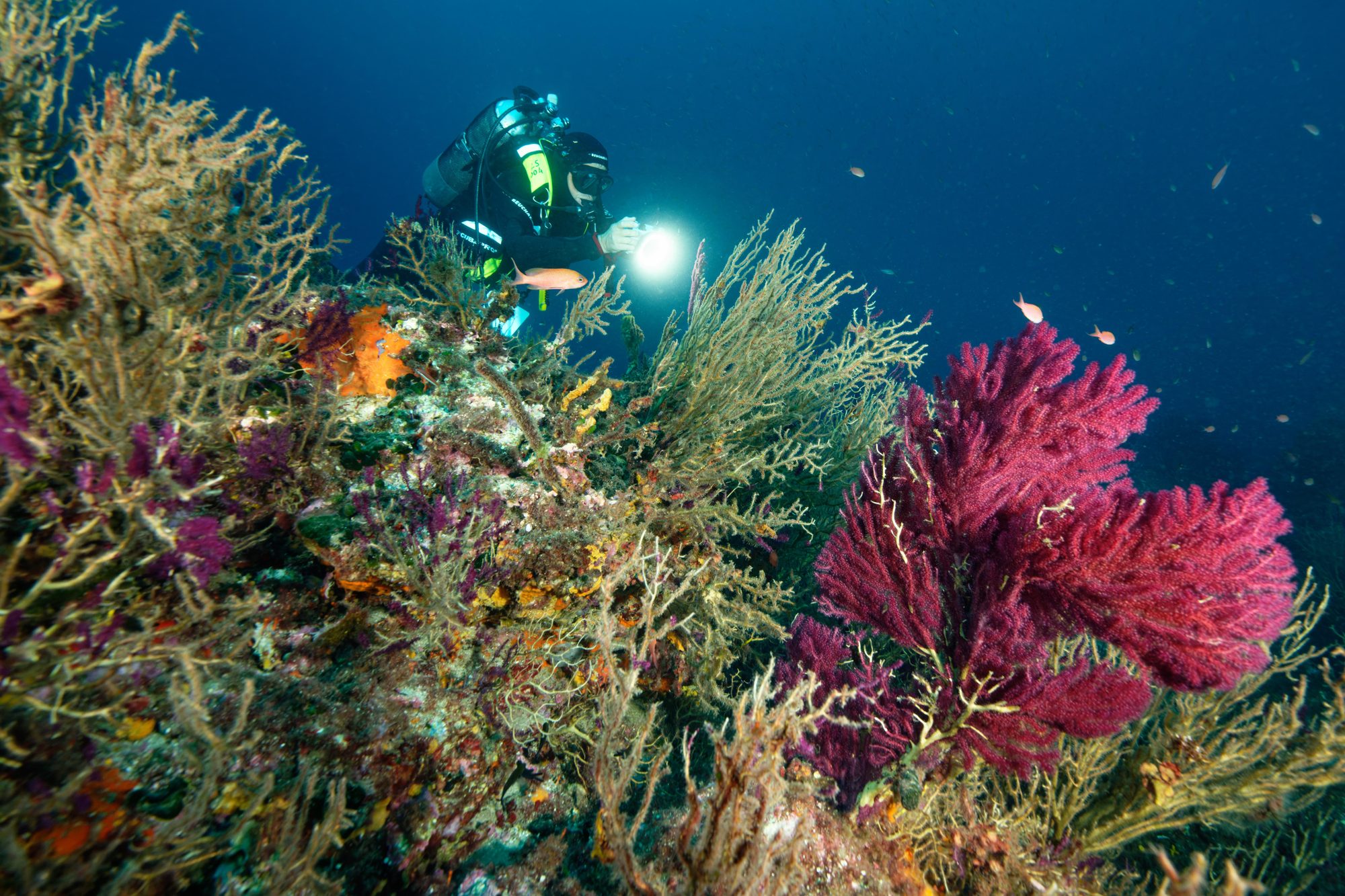
Capo Testa & Punta Falcone
Secca degli Ombrelli
A granite column standing forty metres off the bottom.
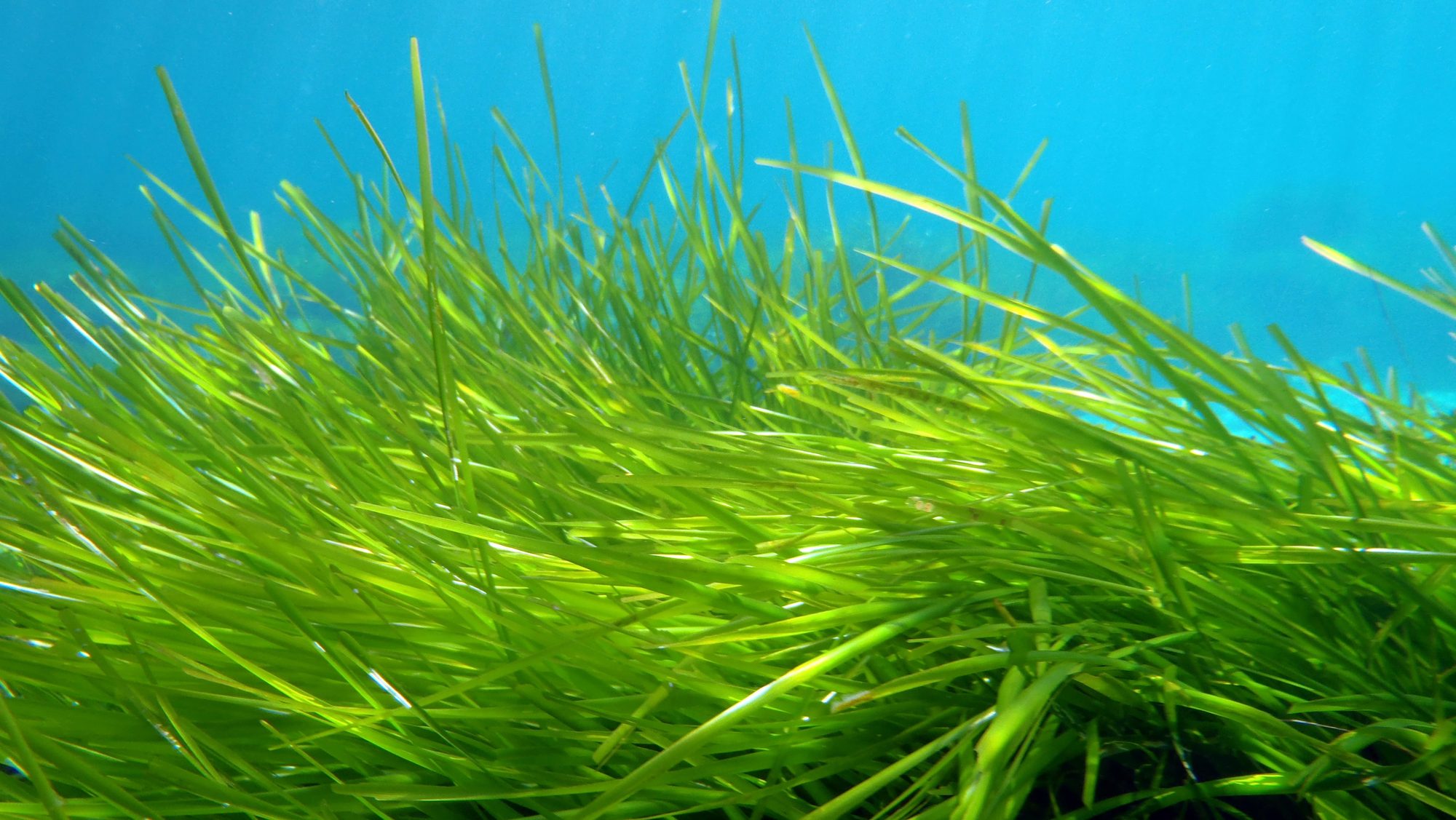
Capo Testa & Punta Falcone
Secca del Cristo
Granite outcrops standing in an extensive seagrass meadow.
Lavezzi & the Strait of Bonifacio
Écueil des Lavezzi — Balise Sud
A drift over granite towers at France's southernmost point.