Secca della Marmorata
Relitto Angelika
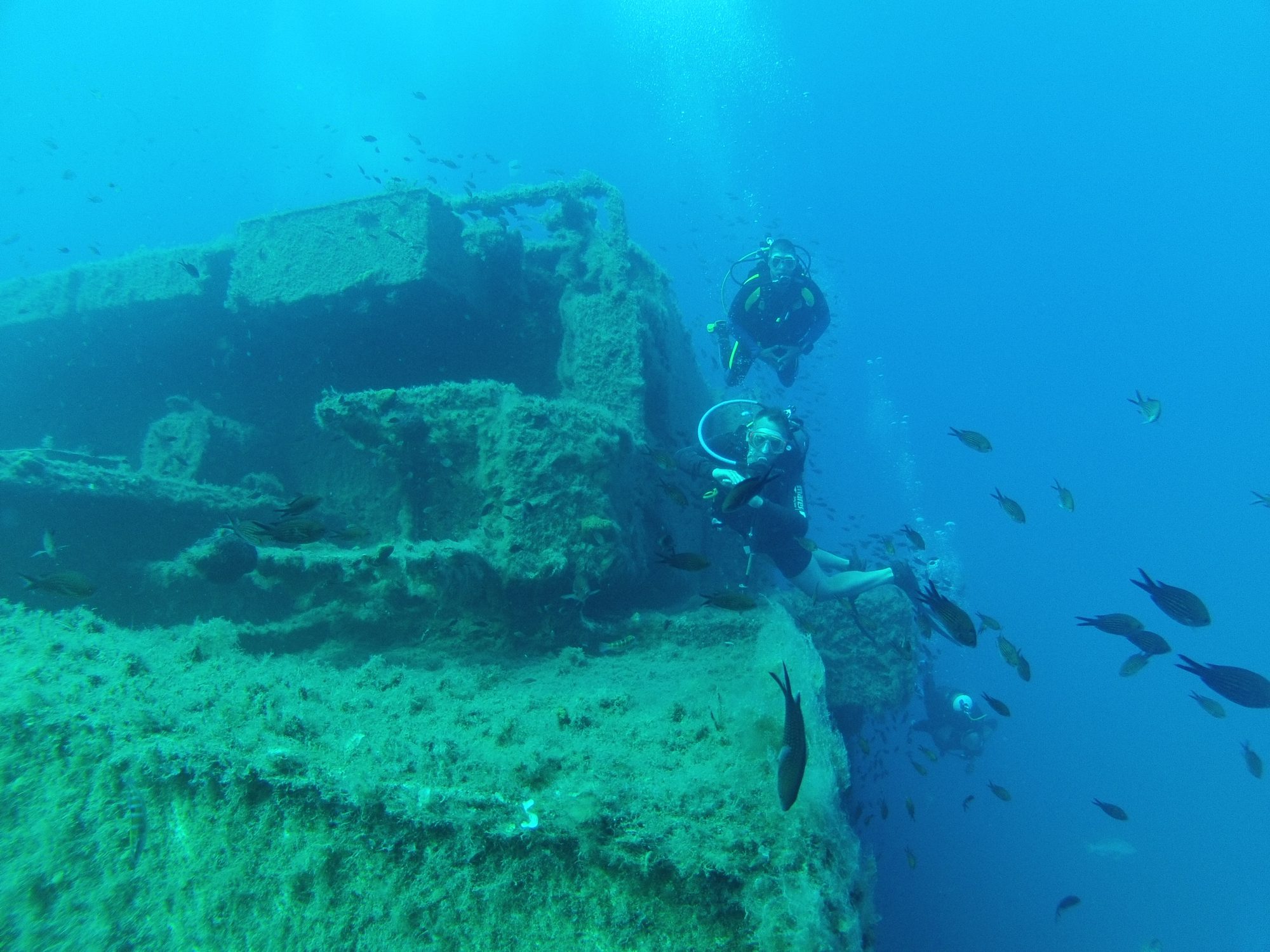
A seventy-metre cargo ship, broken by the sea, at twenty metres.
- Depth
- 12–20 m
- Certification
- Open Water — Advanced recommended
- Experience
- Intermediate
- Current
- Low
- Dive Style
- Wreck
How we rate
Our ratings compare the twenty-eight dives in this Explorer with one another; they are not universal scores. They show where each site stands within the DCC selection for photography, scenery and marine life, and five represents the strongest expression of that quality.
The Dive
The Angelika was a Greek cargo vessel of around seventy metres. She went aground on the semi-emergent rocks of the Secca della Marmorata during a storm — most accounts give 26 September 1982 — carrying a cargo of potassium chloride from Barcelona to Porto Marghera. Attempts to refloat her failed, and a later storm broke the hull. She sank where she lay.
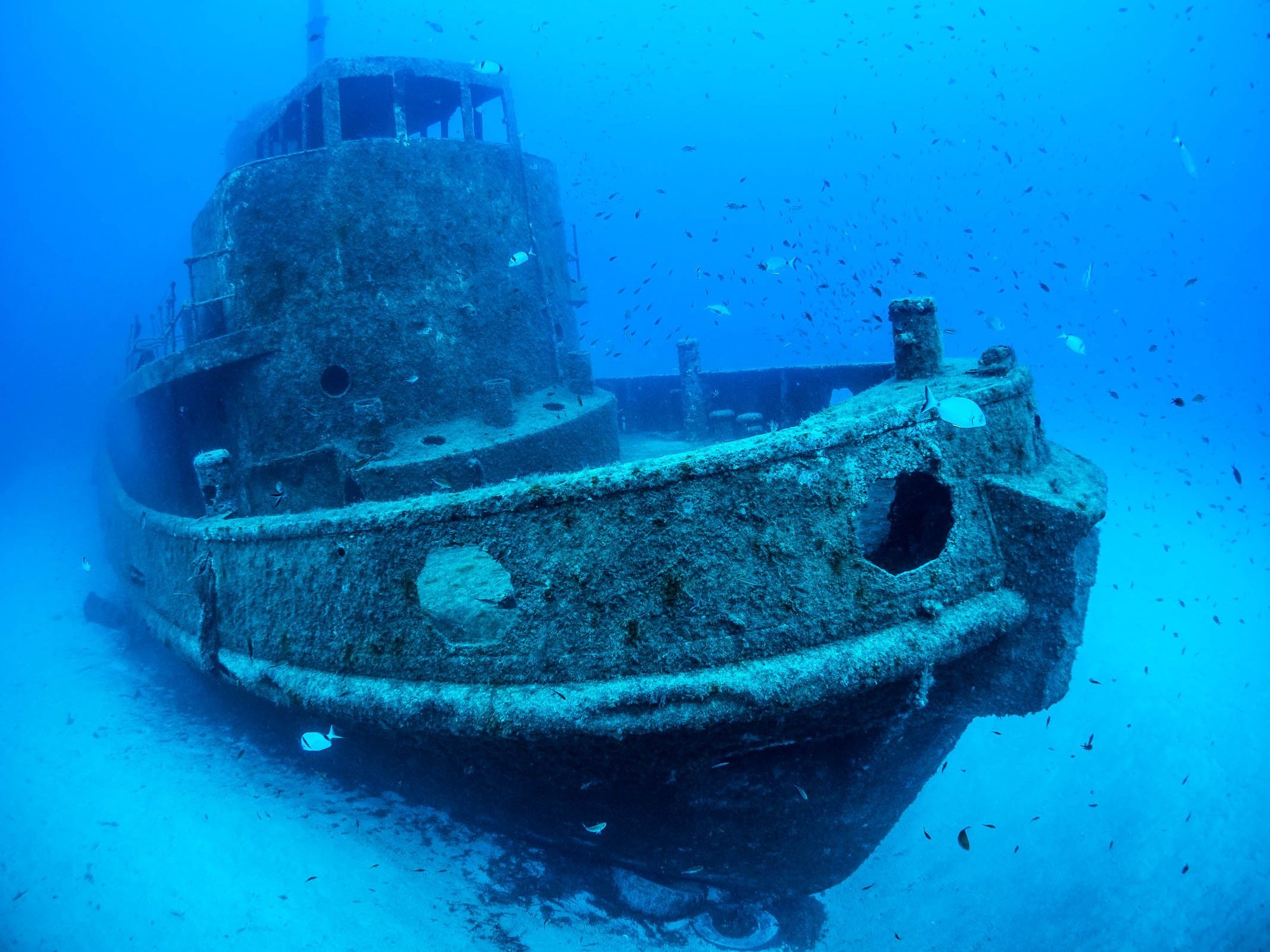
What remains is not a ship-shaped wreck. She lies in two main sections with plating scattered widely around them, which is what happens to a hull that is worked on rock by the sea rather than sunk in deep water. The stern is the best-preserved part: it rests on its port side, with the engine, a three-bladed propeller, winches and an aft deckhouse with its external stairway and portholes still clearly readable. The bow and cargo section, with the bridge structure, lies apart from it.
At twelve to twenty metres she is the only wreck of real substance in this region that sits comfortably inside recreational limits.
Also known as Agelika (variant) · Angelica (IT, informal)
The Experience
The dive is unhurried, which is the point: at eighteen metres, with no current to speak of, you have the gas and the time to work the wreck properly rather than making one pass at it.
The stern section takes most of that time. The deckhouse, the stairway, the portholes and the propeller are all approachable, and the scale of the structure only becomes clear when a diver swims past it. Fish have colonised the shelter thoroughly — moray and conger in the plating, scorpionfish on the flat surfaces, seabream over the open sections. Away from the main sections, the scattered plating on the sand is worth searching.
Underwater Landscape
A broken steel hull on rock and sand at twelve to twenty metres: two main sections — stern on its port side, bow and cargo area separate — with plating scattered between and around them.
Why It’s Special
- 01
A seventy-metre cargo ship in recreational depth, with no current
- 02
A stern section preserved well enough to read as a ship: engine, propeller, winches, deckhouse
- 03
Enough bottom time to dive the whole wreck rather than sample it
- 04
The clearest illustration in this catalogue of a hull being absorbed into a reef
- 05
The only accessible wreck between the Strait and the archipelago
Marine Life
Moray and conger in the plating and confined spaces, scorpionfish on the flat surfaces, seabream and salema over the structure, octopus in the debris. The wreck functions as an artificial reef and the fauna is that of a sheltered hard bottom.
Flora & Benthic Life
Sponges and algal colonisation across the exposed steel, with encrusting communities established on the older surfaces and inside the shaded structures.
Best Conditions
Sheltered, with low current, and diveable across a wide range of weather. Good visibility substantially improves the dive because the wreck is scattered and only reads as one object when you can see across it.
Photography
Five stars, and the most reliable wide-angle site in the catalogue: shallow, calm, well lit and full of recognisable shapes. The frame is always the same principle — a structure with a diver behind it for scale, shot from low and close with a wide lens. The propeller and the deckhouse stairway are the two signature subjects. Natural light is often sufficient above fifteen metres.
DCC Tip
Back off. The commonest mistake here is diving the wreck at arm's length, which gives you forty minutes of corroded plate and no sense of a ship. Swim ten metres out, turn round, and look at the whole section — then go back in for the detail.
Safety & Conservation
This is an external wreck dive. Structures on a broken hull that has been worked by the sea for four decades are unstable, and confined spaces within them are not entered — no penetration is offered or permitted without the specific training, configuration, equipment and planning that wreck penetration requires, and narrow spaces are never entered at all. Cut edges and entanglement hazards are present: keep equipment streamlined and stay clear of hanging plate. Nothing is removed from the wreck. Access is subject to current protected-area regulations and daily operational conditions.