Capo Testa — lighthouse sector
Ancore Spagnole
Two anchors on a reef, and a story nobody can finish.
- Depth
- 12–30 m, with deeper reef beyond
- Certification
- Open Water — Advanced recommended
- Experience
- Intermediate
- Current
- Condition-dependent
- Dive Style
- Granite Reef · Wall
How we rate
Our ratings compare the twenty-eight dives in this Explorer with one another; they are not universal scores. They show where each site stands within the DCC selection for photography, scenery and marine life, and five represents the strongest expression of that quality.
The Dive
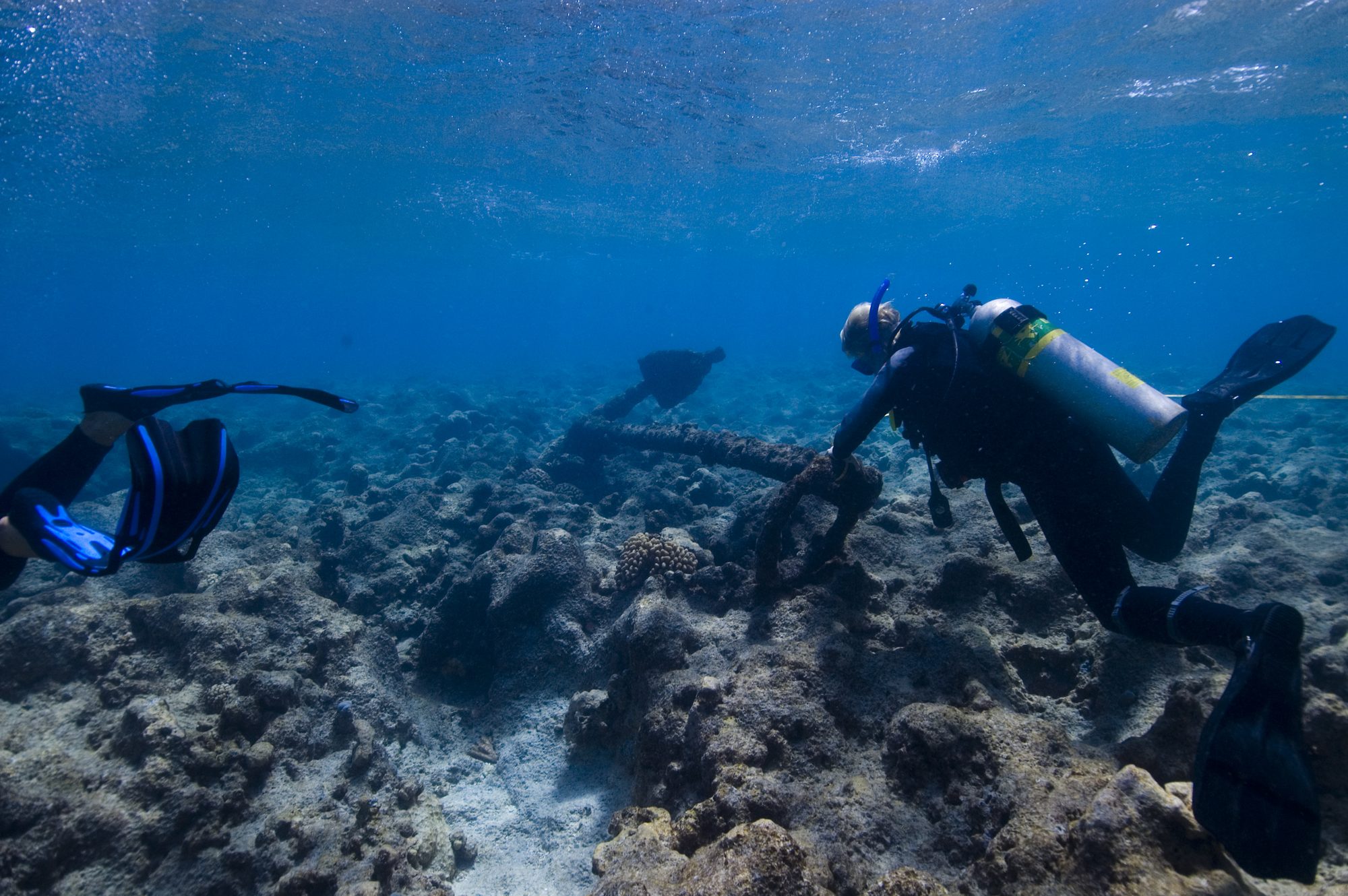
Two large anchors lie on a broad granite reef near the Capo Testa lighthouse, at around twelve metres. Local tradition holds that they come from a Spanish sailing vessel lost here in the eighteenth century, and both local sources that describe the site hedge that attribution carefully — one says "of Spanish type", the other "approximately" the eighteenth century. That hedging is the honest position and this page keeps it.
What is not in doubt is that this stretch of coast carries a great deal of submerged archaeology. National heritage survey work in this protected area has catalogued several wreck sites and ancient quarry sites, and an anchor from one of the catalogued wrecks was recovered here in the 1970s. Whoever lost these two, they belong to a real and documented maritime landscape rather than a decorative one.
As a dive, the anchors are the opening rather than the whole. The reef around them extends across a wide depth range and continues down a steep face.
Also known as Secca Ancore (IT)
The Experience
The anchors appear early and are genuinely impressive objects — large, corroded, half-integrated into the reef, with their shapes still perfectly legible. Divers tend to spend longer with them than planned.
After that the dive becomes a reef dive: along the broad shallow platform, then down the steep wall, with depth chosen according to the group. Grouper and moray occupy the recesses; seabream and damselfish work the upper rock. The contrast between the man-made object and the rock around it is the thing that stays with you, and the best way to feel it is to leave the anchors, dive the reef for twenty minutes, and come back past them at the end.
Underwater Landscape
A broad granite reef near the lighthouse, extending from shallow rock through a platform at intermediate depth and down a steep wall. The two anchors lie on the shallower reef.
Why It’s Special
- 01
Two large historic anchors, in situ, at accessible depth
- 02
A reef that continues well beyond the artefacts rather than stopping at them
- 03
Part of a coastline with documented, surveyed submerged archaeology
- 04
A wide depth range allowing several different profiles
Marine Life
Dusky grouper, seabream, moray, octopus, damselfish and scorpionfish, with the crevice fauna typical of granite reefs in this sector.
Flora & Benthic Life
Photophilic algal communities on the illuminated reef, giving way to sponges, bryozoans and shade-dwelling encrusting organisms on the steep face and beneath the overhangs.
Best Conditions
Current at this site is reported as variable and at times strong, which is consistent with its position near the cape. The shallow platform is workable in most conditions; the wall needs a settled day.
Photography
The anchors are the frame. Use a diver behind and slightly above one to give scale — an anchor photographed alone reads as a piece of scrap metal, and with a human in the shot it reads as history. Shoot from low and wide. The encrusted surfaces of the flukes are a legitimate macro subject.
DCC Tip
Photograph the anchors on the way back, not on the way out. Everyone arrives with a full tank and a plan and spends fifteen minutes on them at the start — by returning at the end you get them to yourself, in the lower, warmer light, with the silt from the first pass long settled.
Safety & Conservation
The anchors are archaeological material. They are not to be touched, moved, cleaned, sat on or used as a photographic prop, and nothing is to be removed from the site — look, don't touch. Nothing is to be moved or removed. Any newly discovered artefact must be left in place and reported. Current near the cape varies and the wall section is dived only when conditions allow. Access is subject to current protected-area regulations and daily operational conditions.
Dive these too
Capo Testa & Punta Falcone
Grotta della Cernia
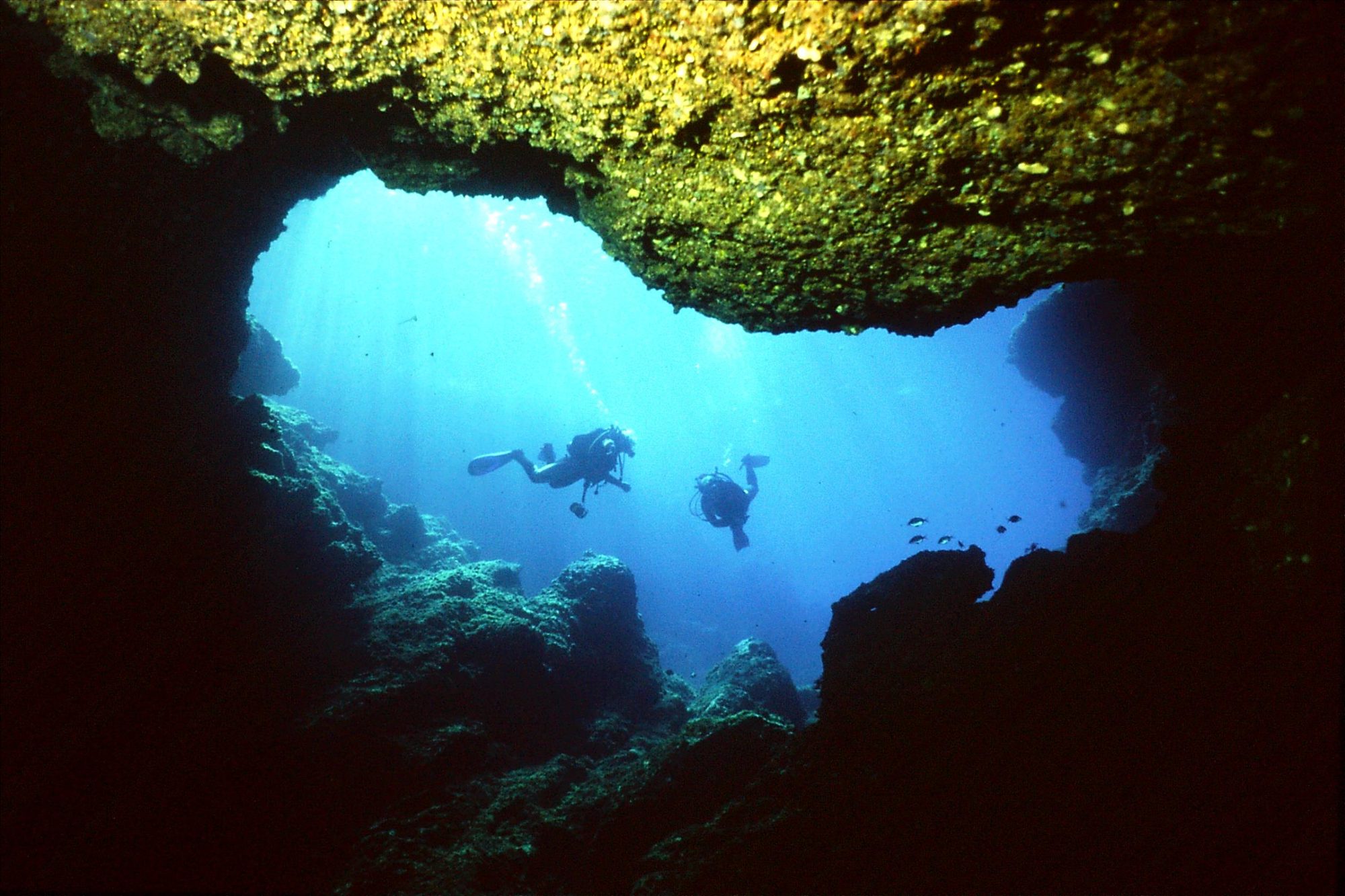
Granite spires and shaded passages, with the best light here.
Capo Testa & Punta Falcone
La Balena
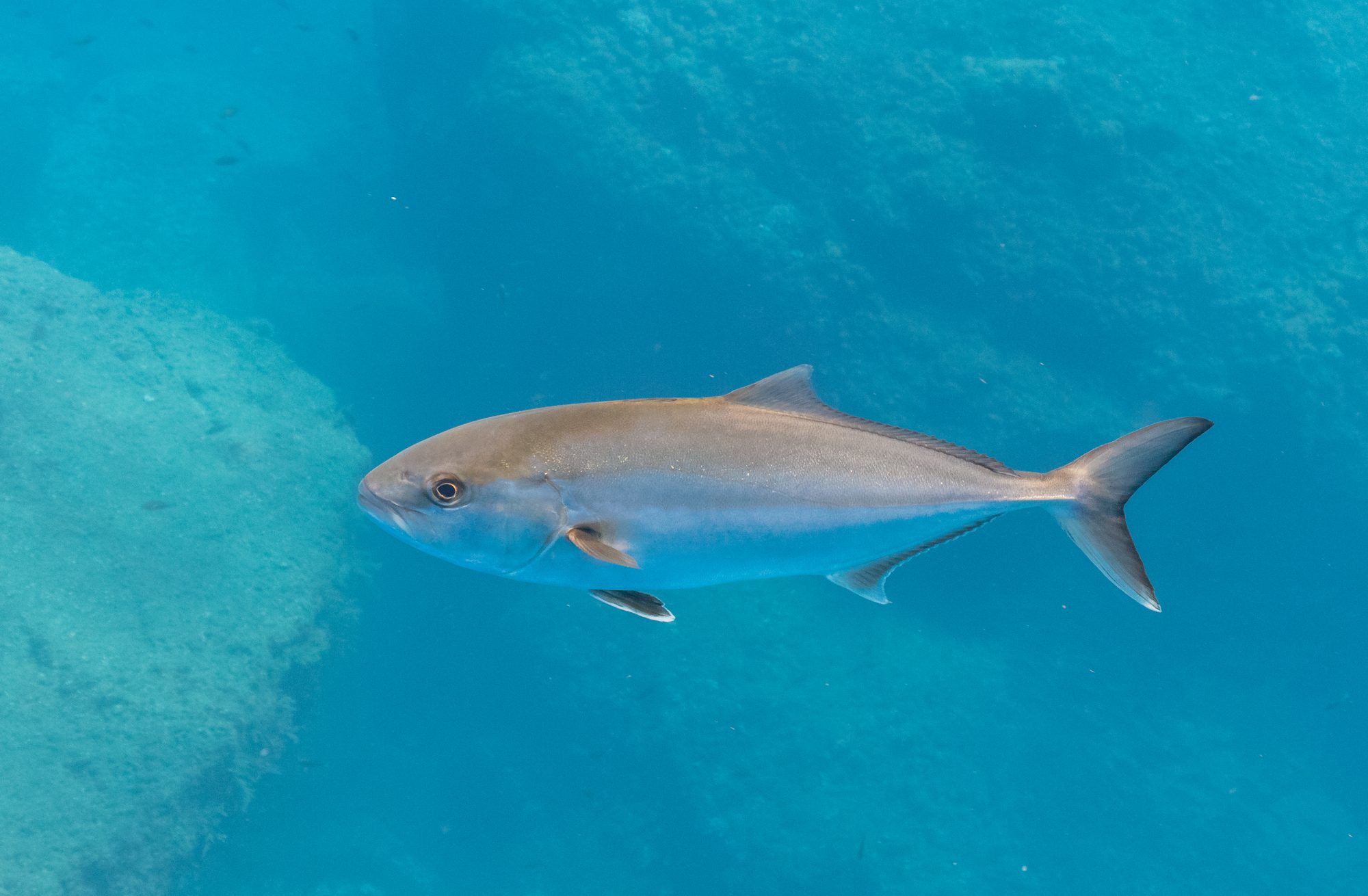
Broad granite canyons where fish gather to spawn in spring.
Capo Testa & Punta Falcone
Relitto Angelika
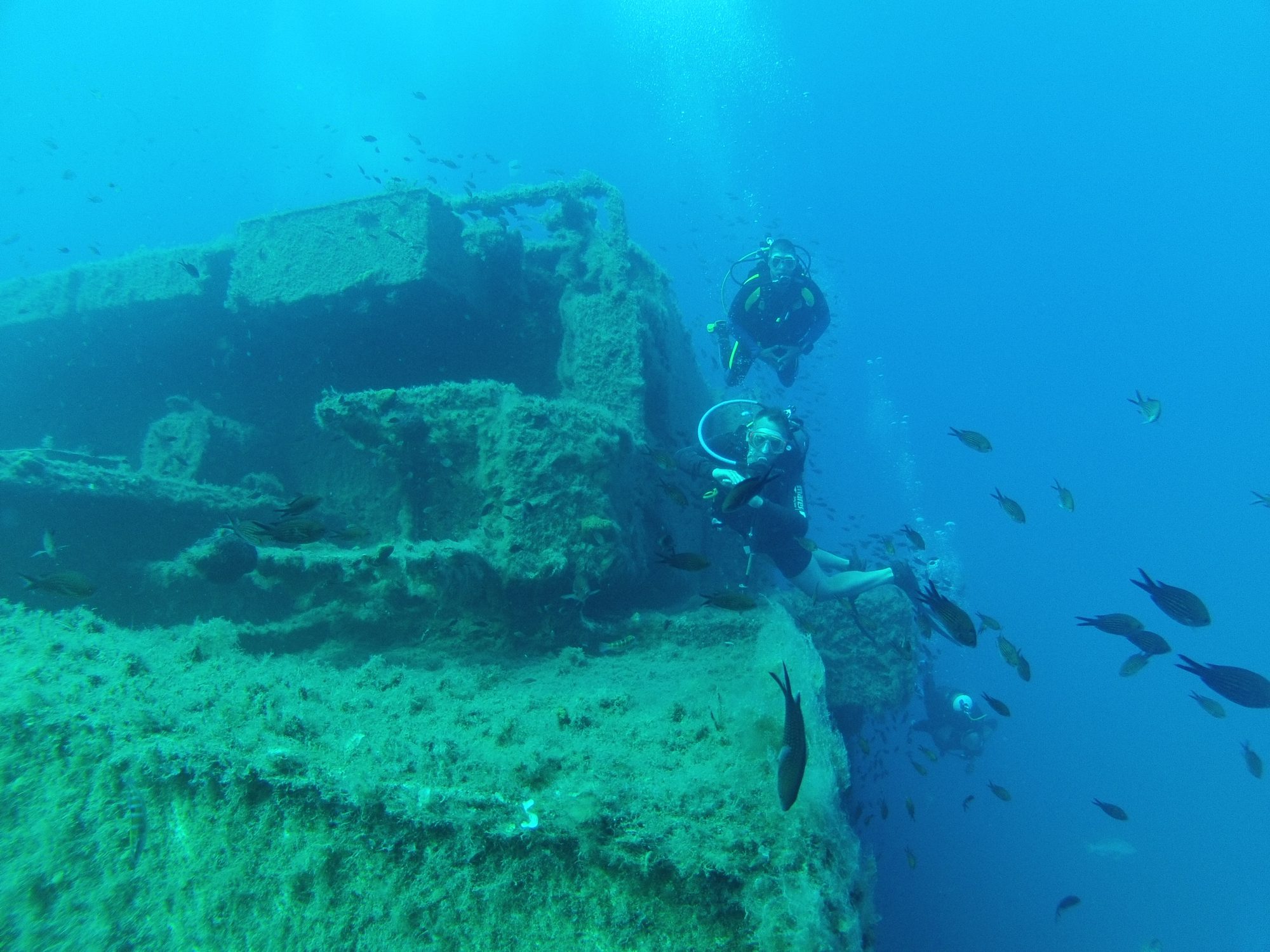
A seventy-metre cargo ship broken in two at twenty metres.