Capo Testa
La Balena
Where the fish come to spawn, and the canyons are big enough to lose the group in.
- Depth
- 10–35 m depending on itinerary
- Certification
- Open Water — Advanced recommended
- Experience
- Intermediate
- Current
- Low
- Dive Style
- Granite Reef · Wall
How we rate
Our ratings compare the twenty-eight dives in this Explorer with one another; they are not universal scores. They show where each site stands within the DCC selection for photography, scenery and marine life, and five represents the strongest expression of that quality.
The Dive
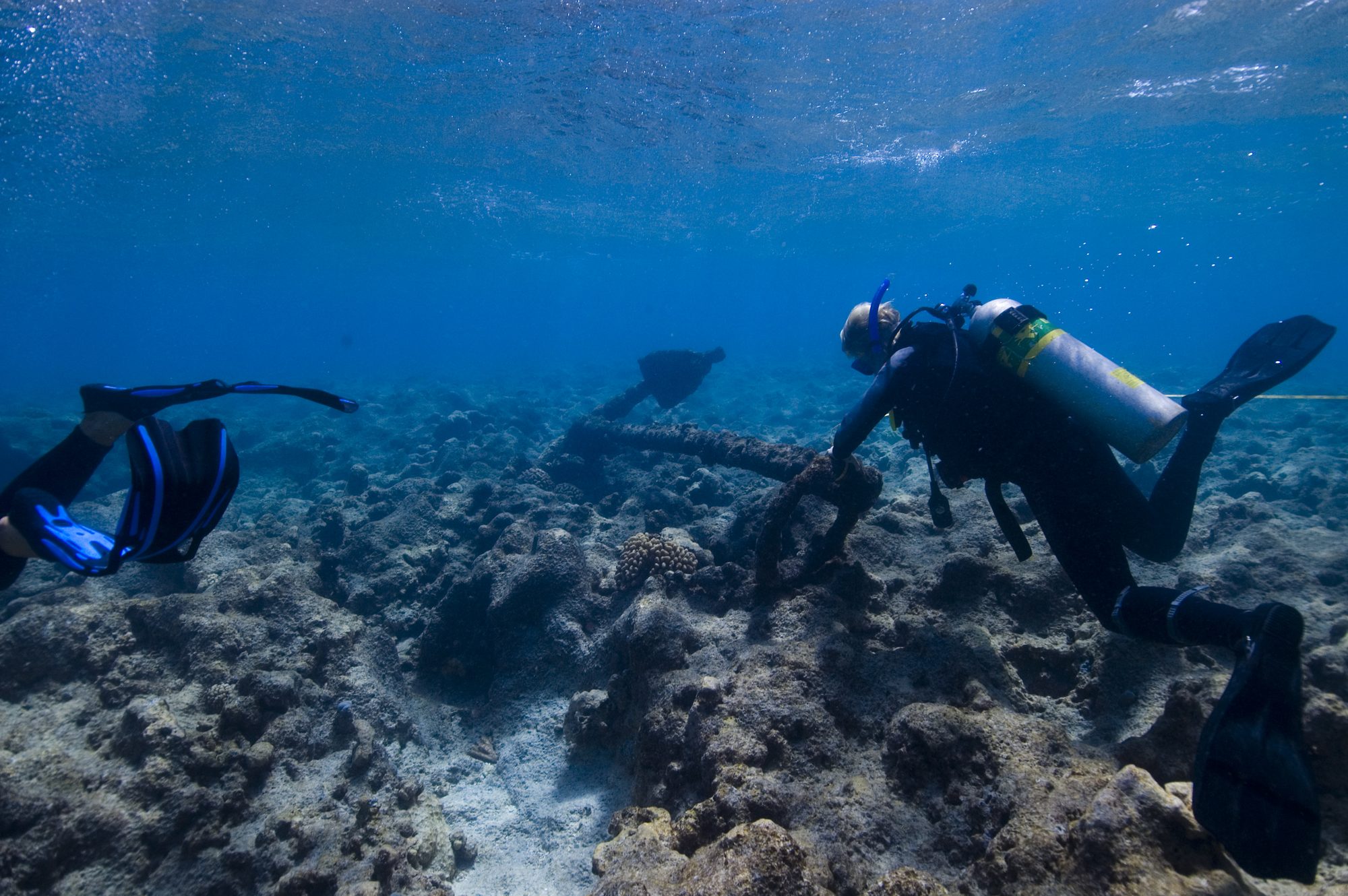
La Balena is a reef of very large granite masses running down from the coast, cut by canyons deep and wide enough to change the light completely when you drop into one. It is among the more varied dives at Capo Testa, and one of the easier ones: current is generally weak or absent, and the depth can be run anywhere between ten and thirty-five metres without losing the character of the site.
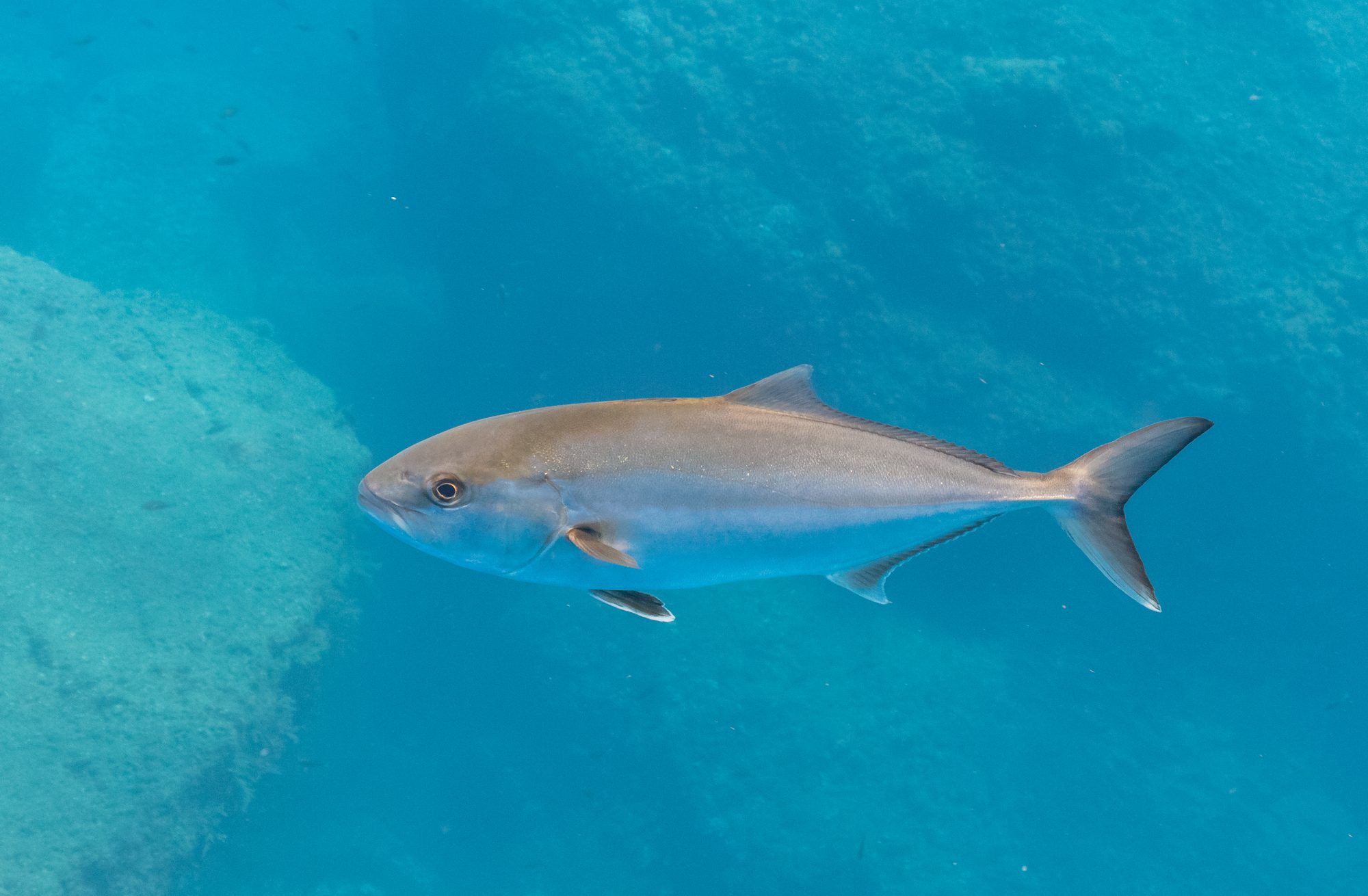
Its distinguishing feature is seasonal rather than structural. Local divers describe this reef as a place several fish species choose for reproduction, gathering here in large shoals from spring onward. That is an unusual thing for a dive site to be known for, and it means the site is a different experience in May than in September — most Mediterranean reefs are not.
Red gorgonians grow on the shaded faces, and the reef carries the nudibranch fauna that goes with them.
The Experience
The dive alternates between two registers: the open rock, where the granite masses are exposed and the light is strong, and the canyons, where the walls close in and the temperature and colour both drop.
In spring and early summer the shoals are the event — dense aggregations moving through the open sections in numbers that make the reef behind them hard to see. Outside that period the site is quieter and the interest shifts to the walls, where gorgonians, nudibranchs and forkbeard occupy the shaded faces.
Depth is a matter of choice rather than of terrain here. The canyons work at twenty metres and at thirty-five, and the guide will pick the level from the group rather than from the site, which is part of why it is one of the easier Capo Testa dives to run with a mixed party.
Underwater Landscape
Very large granite masses descending from the coast to around thirty-five metres, cut by broad canyons, with overhangs, steps and sand patches between the formations.
Why It’s Special
- 01
Canyons large enough to be their own environment rather than gaps between rocks
- 02
Documented spring and summer spawning aggregations of several species
- 03
Red gorgonians on the shaded walls with an associated nudibranch fauna
- 04
Weak current and an adaptable profile, making it one of the more dependable Capo Testa dives
Marine Life
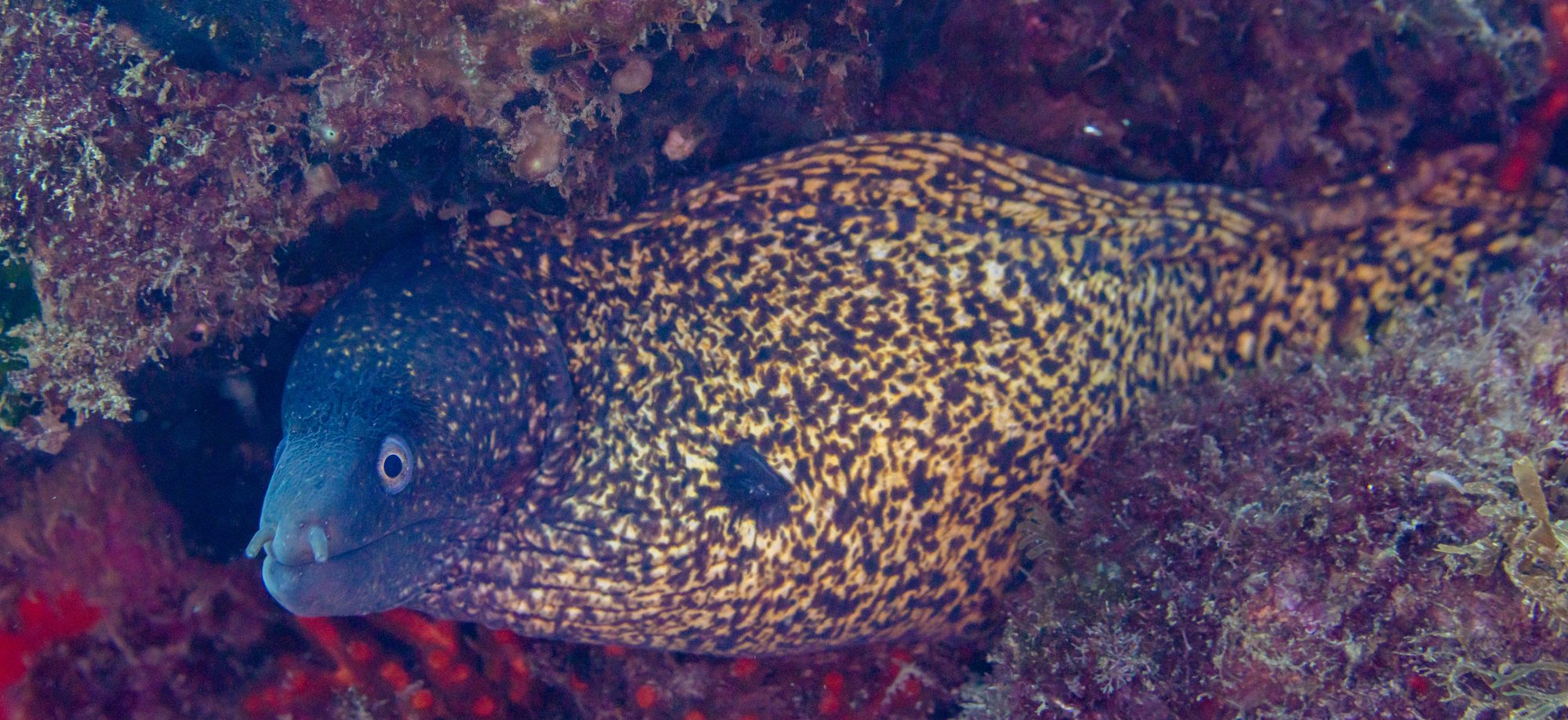
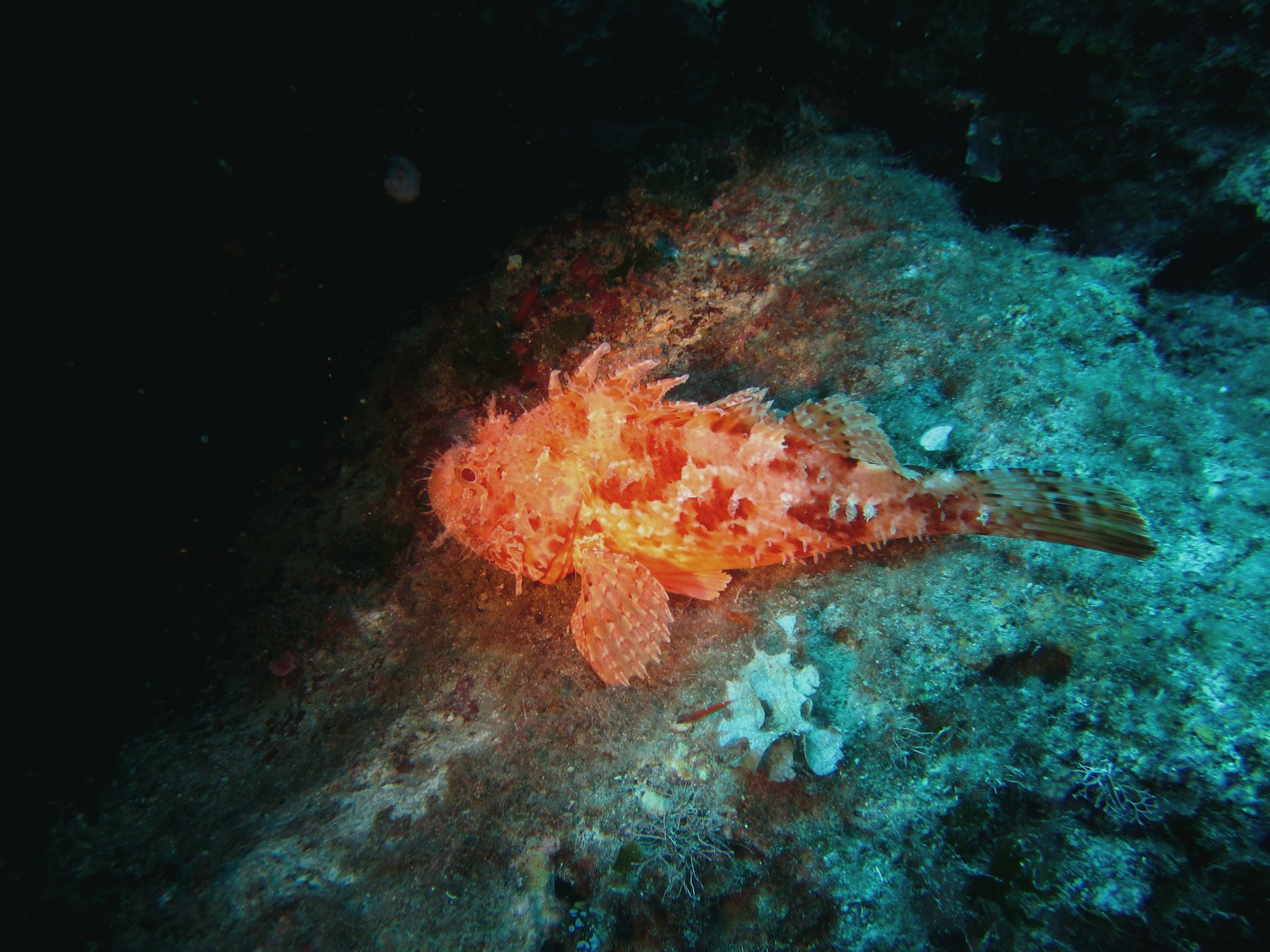
Large shoals of several species gather here for reproduction from spring onward. Year-round: dusky grouper, seabream, damselfish, moray, octopus, forkbeard, and dentex in the more open water.
Flora & Benthic Life
Red gorgonian on the shaded faces — some of the better specimens in this sector are reported here. Nudibranchs including Hypselodoris species on the walls, with sponges, bryozoans and encrusting communities in the shade.
Best Conditions
Generally calm with weak or absent current, making it a useful fallback when the offshore shoals are unworkable. Spring and early summer for the aggregations. The canyons need decent visibility to read properly.
Photography
Best in spring, when the aggregations give you a subject that fills a wide-angle frame — an opportunity most of this coastline does not offer. Outside that window it is a macro site: nudibranchs on the shaded walls, and the gorgonian polyps themselves at close range.
DCC Tip
If you dive here in spring, go in without a camera plan and just watch for the first ten minutes. Spawning aggregations behave in ways that are genuinely worth observing, and divers who arrive already composing miss the behaviour entirely.
Safety & Conservation
Canyon terrain makes it easy to lose sight of a buddy — the group stays together and the guide sets the route through the formations. Spawning aggregations must not be swum into, herded or separated; keep your distance and let the fish continue. Gorgonians break on contact and recover over years. Access is subject to current protected-area regulations and daily operational conditions.
Collections