Capo Testa
Punta Contessa
Well sheltered, easy to read, and a good place to be taught something.
- Depth
- 10–30 m
- Certification
- Open Water
- Experience
- Beginner
- Current
- Low
- Dive Style
- Granite Reef · Shallow Reef
How we rate
Our ratings compare the twenty-eight dives in this Explorer with one another; they are not universal scores. They show where each site stands within the DCC selection for photography, scenery and marine life, and five represents the strongest expression of that quality.
The Dive
Punta Contessa is the most sheltered dive at Capo Testa, and that is its argument. The reef sits in a protected position, runs from ten metres to thirty, has no current worth planning around, and is described by local divers as suitable for every level.
It is not a spectacular site and this page does not claim otherwise. What it is, is legible: a granite reef with terraces, fissures and sand patches, arranged simply enough that a diver can navigate it themselves, with enough small habitats packed into a short distance that a slow diver will see a great deal more than a fast one.
That makes it genuinely useful. It is where continuing-education dives happen, where a photographer works out a new lens, and where a diver who has been told to slow down finally has a reason to.
The Experience
The route follows the submerged shape of the point, moving between illuminated rock, small walls and stretches of sand. Depth changes gently and nothing about the terrain forces a decision.
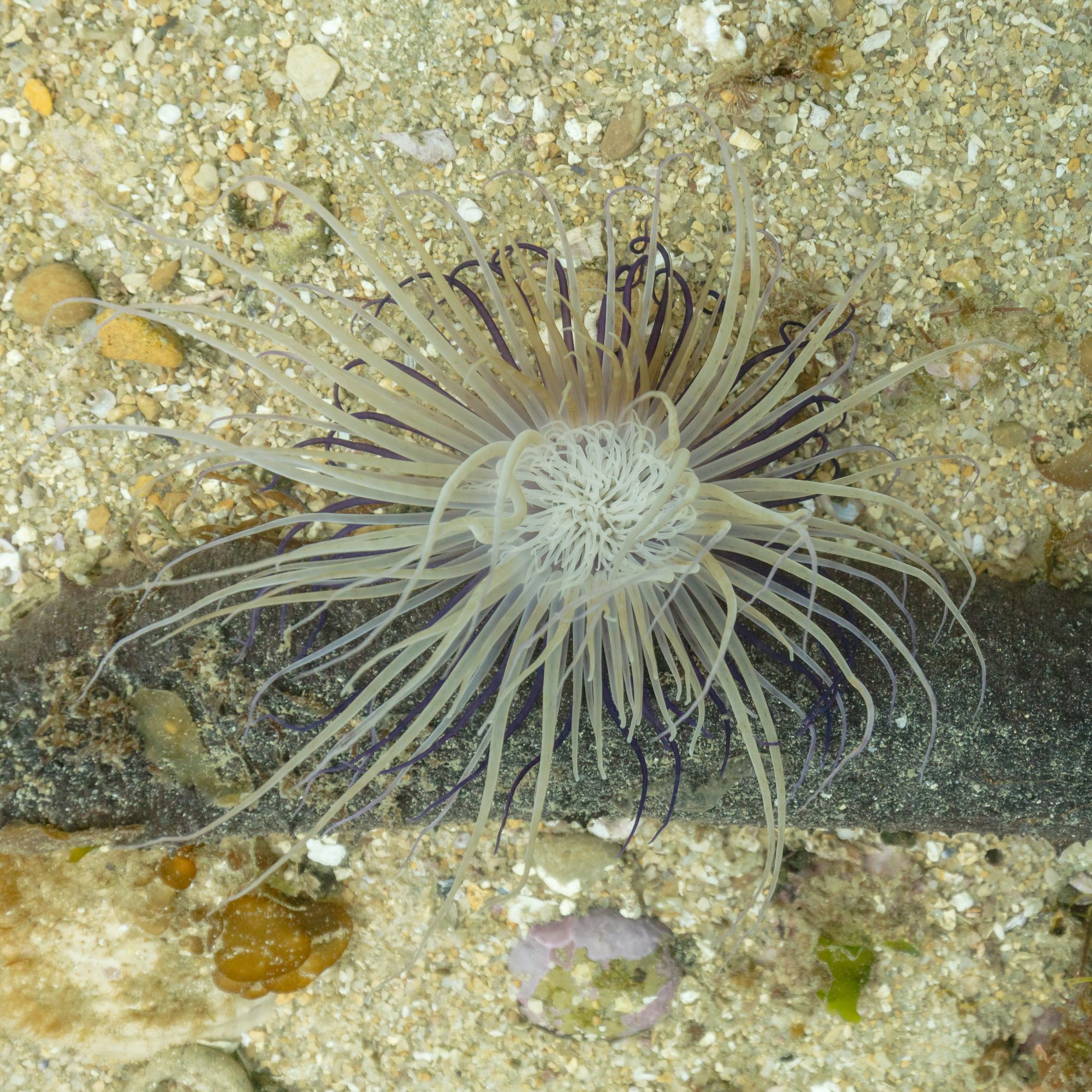
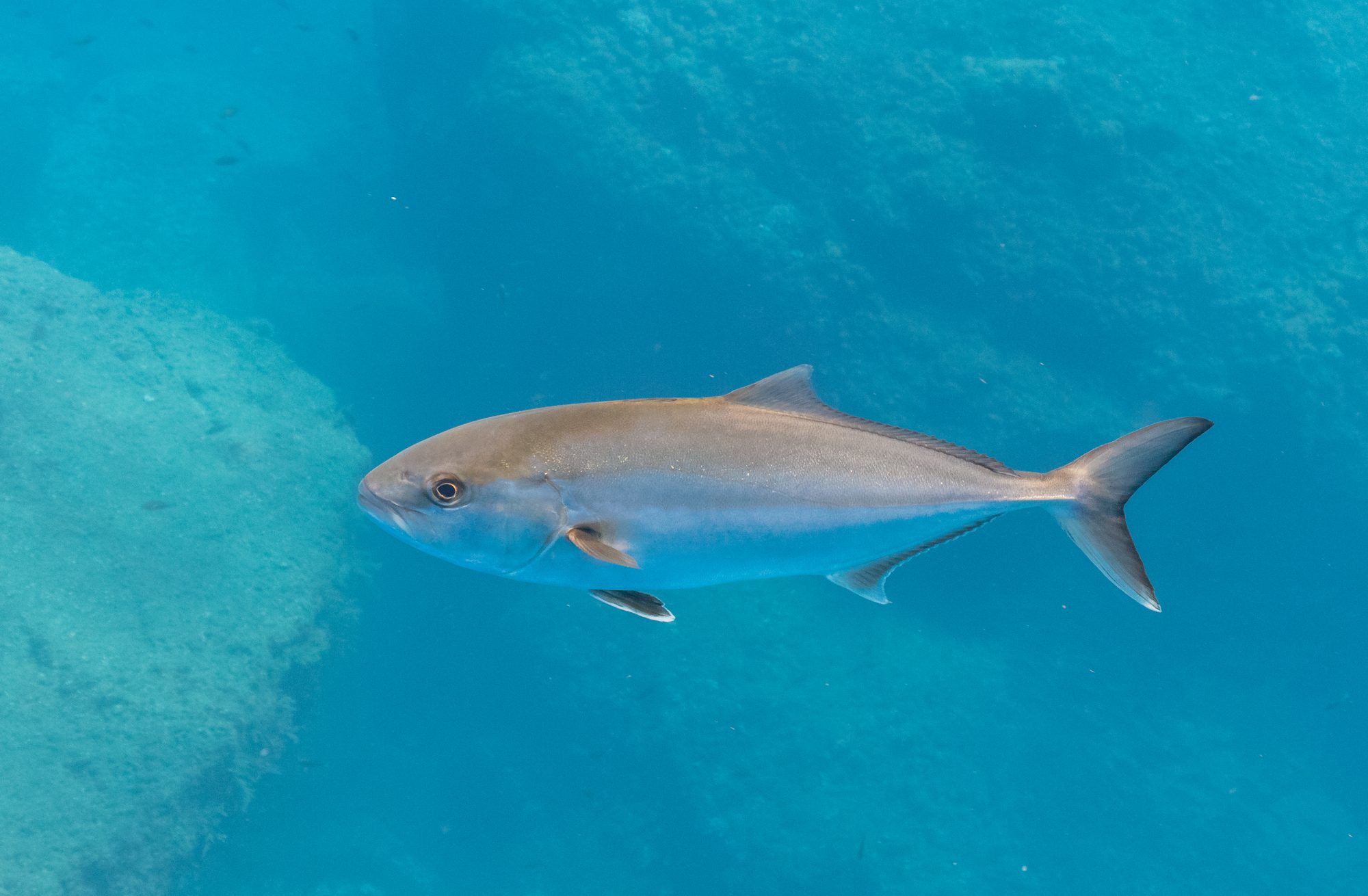
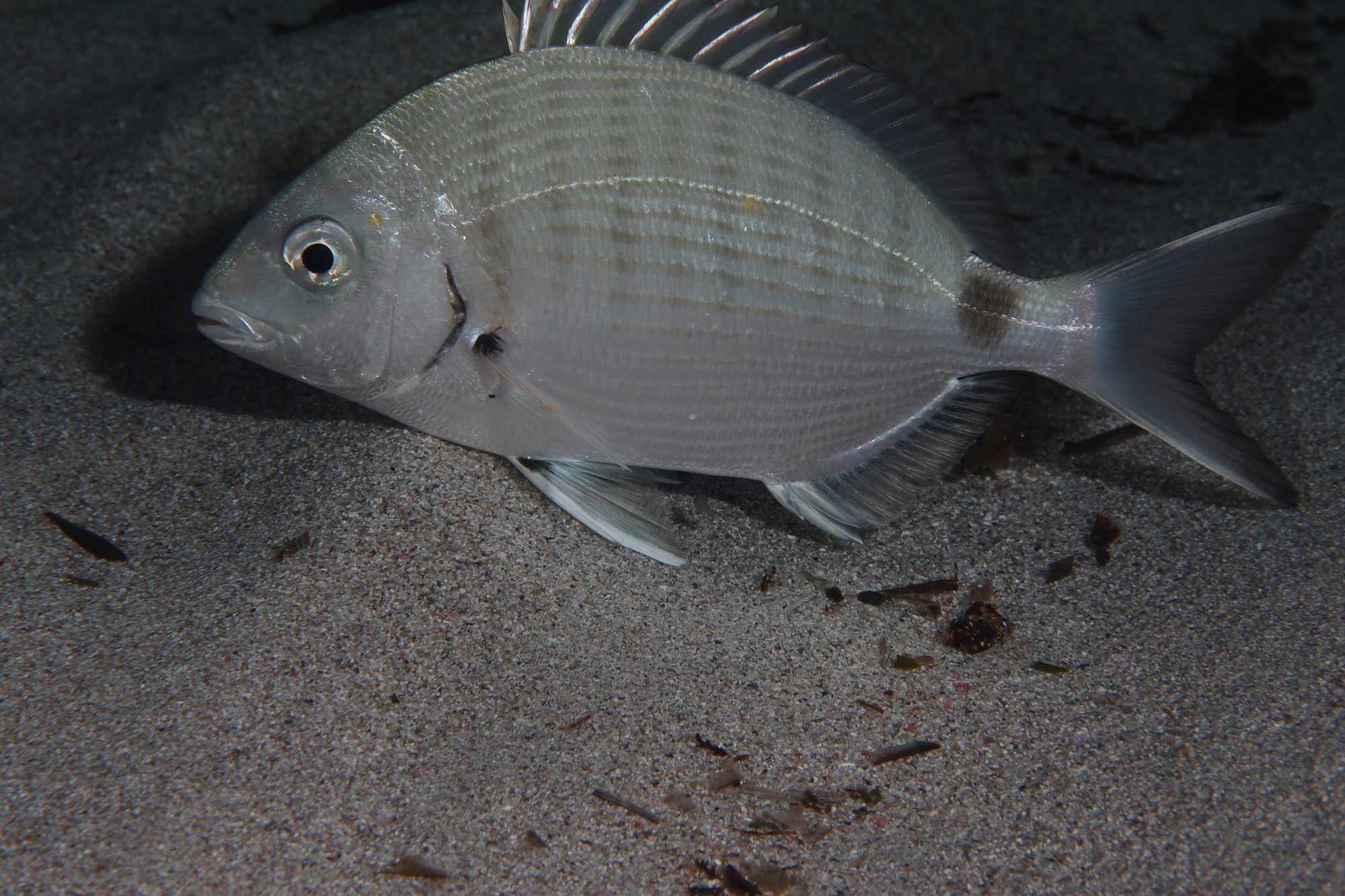
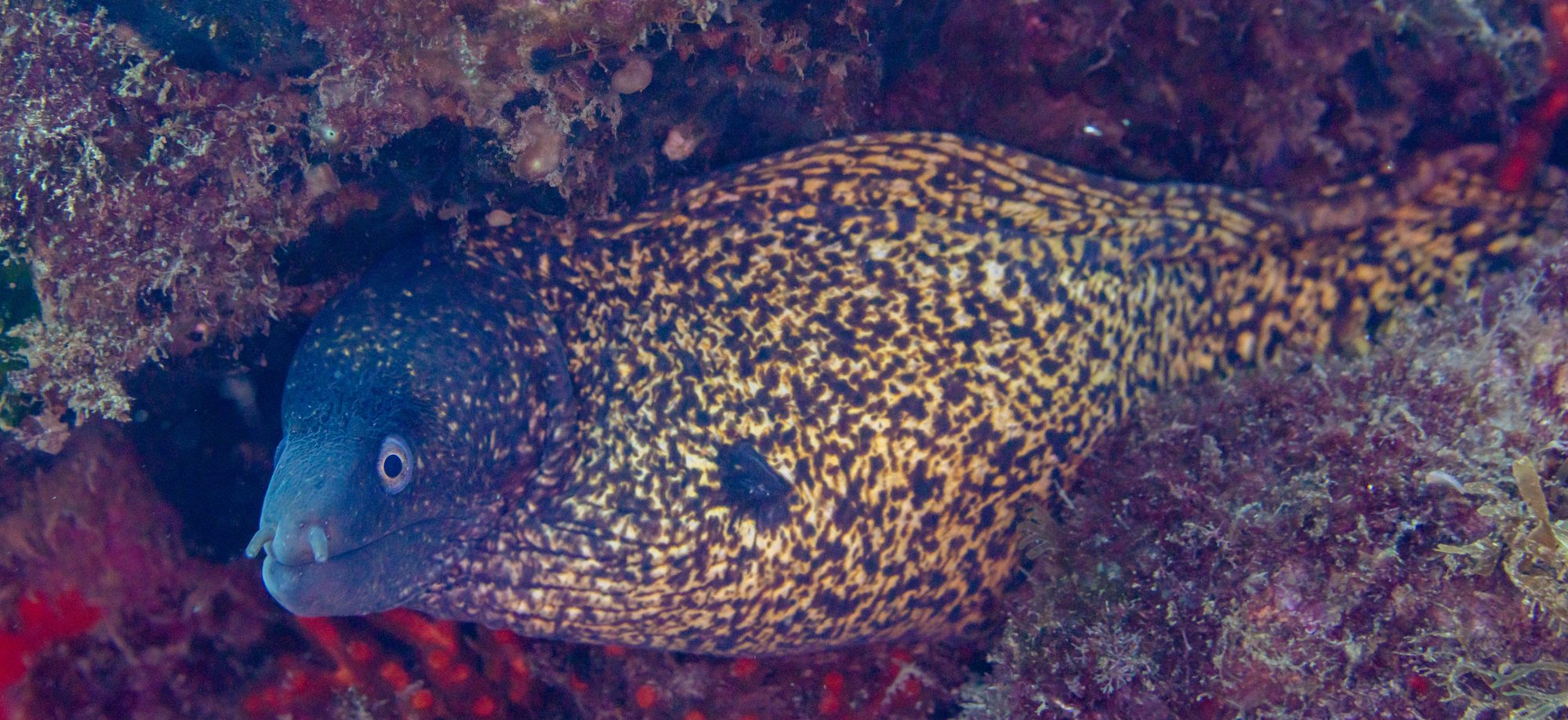
The fauna is the standard community of a well-protected Mediterranean granite reef, and the rewarding part is how much of it is in the fissures. Moray, octopus and scorpionfish occupy the gaps; seabream and damselfish move over the open rock; the undersides of the terraces carry encrusting life. Grouper are present.
Because nothing about the site is demanding, it becomes whatever the diver brings to it: a navigation exercise, a first attempt at buoyancy fine enough to hover a hand's width from a fissure without touching it, or simply an unhurried second dive with the afternoon light coming through.
Underwater Landscape
Granite following the submerged point: terraces, low walls, fissures and sand patches from about ten metres to thirty. Modest relief, straightforward layout.
Why It’s Special
- 01
The most sheltered site in the Capo Testa sector, diveable when most others are marginal
- 02
A simple, navigable layout that suits training and skills work
- 03
A high density of small habitats in a compact area
- 04
Undemanding depth and current, with a full Mediterranean reef community
Marine Life
Seabream, damselfish, wrasse, moray, octopus, scorpionfish and dusky grouper, with the crevice fauna characteristic of sheltered granite reefs in this sector.
Flora & Benthic Life
Well-developed photophilic algal communities on the illuminated rock — local sources note the vegetation here specifically — with sponges and encrusting organisms on the shaded terrace undersides and Posidonia on the sand margins.
Best Conditions
Sheltered in most weather and one of the last sites in the sector to become undiveable. Current is generally low. Bright conditions improve the shallower half.
Photography
Two stars, honestly assessed: the terrain is not dramatic and the light is ordinary. It is, however, an excellent place to practise, because it is shallow, calm, and full of small static subjects that will wait while you get the settings right.
DCC Tip
Dive it at half your normal speed and cover a quarter of your normal distance. This is a site whose whole value is in the fissures, and at a standard swimming pace it will look like fifty metres of unremarkable granite.
Safety & Conservation
Undemanding conditions, but the shallow sheltered profile is exactly where divers get careless with fin contact — the algal and encrusting communities here are the reason the site is worth diving and they are easily scoured. Octopus and moray are not to be handled or drawn out of their shelters. Access is subject to current protected-area regulations and daily operational conditions.
Collections